
Global Chemical Additives White Paper (2026)
The Logic of Additive Application Amidst Evolving Formulations, Regional Landscapes, and Regulatory Restructuring
Research and Compilation: Dongguan Ruikun Material Technology Co., Ltd.
November 2026
Executive Summary
This white paper addresses a question often oversimplified: what logic should guide the selection of chemical additives when formulation systems, regulatory constraints, and supply chain landscapes are all shifting simultaneously? We begin by using verifiable data to illustrate changes in demand structure. In 2025, the global coatings market is valued at approximately $213.4 billion—a year-on-year increase of 5.49%—even though sales volume has not grown at the same pace. In China, coatings production reached 34.602 million tons, a 7.1% year-on-year decline, yet total profits rose by 11.5%. This signals a shift in growth drivers from sheer volume (surface area covered) to quality, fundamentally altering the role of additives within formulations.
From a regulatory perspective, the EU REACH Candidate List had grown to 253 entries by February 2026, with the proposal for a broad restriction on per- and polyfluoroalkyl substances (PFAS) having cleared the Committee for Risk Assessment and moved into the socio-economic analysis consultation phase. Meanwhile, China has established its own set of requirements, anchored by the "Environmental Management Registration of New Chemical Substances" and four mandatory national standards. These regulatory disparities mean that a single additive may require different documentation packages and formulation adjustments depending on the target market.
On the technical front, the analysis is structured around three core themes: foam generation and destabilization, pigment dispersion and stabilization, and surface wetting and leveling. We examine how these processes apply across five distinct system types—waterborne, solvent-borne, UV/EB-curable, high-solids, and powder coatings—before mapping out specific applications, common defect diagnostics, and validation methodologies.
The core argument of this text can be summarized in a single sentence: competition among additives has shifted from performance in isolated aspects to the ability to integrate effectively within a system—a capability underpinned by three pillars: synthesis processes, application data, and regulatory documentation. Data cited in the text are accompanied by their respective sources, while points that could not be independently verified are addressed solely through qualitative assessment.
1 Introduction: Why the Global Additives Industry Needs a Re-evaluation
In 2025, the global coatings market was valued at approximately $213.4 billion—a year-on-year increase of 5.49%—yet this growth was not matched by an increase in sales volume (Source: ChemQuest report presented at the World Coatings Council annual meeting; cited in "Research and Analysis on Global Coatings Development" by Liu Jie, Secretary-General of the China National Coatings Industry Association, April 2026). During the same period, China’s total coatings production reached 34.602 million tons, down 7.1% year-on-year. While primary business revenue fell by 3.9% to 388.15 billion RMB, total profit actually rose by 11.5% (Source: "Brief Report on the Economic Performance of China’s Coatings Industry in 2025," China National Coatings Industry Association, March 6, 2026). Taken together, these figures tell a clear story: revenue is no longer driven by "covering more square meters," but rather by "a more sophisticated approach to every square meter."
Additives now find themselves at this critical juncture. Although they typically account for only a single-digit percentage of a formulation's cost, they dictate key performance factors—such as pigment dispersion, the surface characteristics of the paint film, stability during application, and whether a product meets the stringent entry requirements of downstream customers. For the past two decades, additives were often treated as mere "fine-tuning" agents—something formulation engineers might add or test during the final stages of development. That approach is no longer effective. Waterborne systems now confront formulators with complex challenges regarding surface tension, foaming, and drying windows; UV-curable systems link curing speed directly to leveling time; and new regulations mandate the strict tracking of every fluorinated surfactant used.
The transition of formulation pathways is a relatively straightforward dimension. Shifting from solvent-borne systems to water-borne, UV/EB-curable, high-solids, or powder-based technologies is far more complex than merely swapping the medium; each alternative introduces an entirely new set of interfacial conditions. The high surface tension of water makes wetting a primary challenge and complicates foam elimination. In UV-curable systems, low viscosity combined with near-instantaneous curing compresses the window for effective leveling into a matter of seconds. High-solids formulations push viscosity and pigment/filler loading to their absolute limits, transforming the role of dispersants from "grinding aids" into the critical factor that determines whether a formulation is even viable.
Even more rigid than the technical constraints of formulation are those imposed by regulatory frameworks. Compliance, once defined simply by a finished product passing inspection, now entails full-lifecycle substance management—encompassing registration, evaluation, authorization, and restriction—alongside the transmission of supply-chain data and the provision of information to consumers. The number of entries on the EU’s Candidate List continues to grow annually, and the regulatory trajectory for per- and polyfluoroalkyl substances (PFAS) has moved beyond scientific assessment into the formal decision-making process. Compliance is no longer a final check performed after a formulation is complete; it has shifted to the very beginning of the selection process—influencing everything from the choice of raw materials to the procurement of individual monomers.
Another dimension of change lies not in the laboratory, but in orders and logistics. In 2025, China’s exports of coatings reached 407,700 tons—a year-on-year increase of 21.99%—with a clear shift in export destinations toward Asia, Africa, and Latin America (Source: China National Coatings Industry Association, March 6, 2026). In Europe, production capacity has contracted due to energy costs and weak demand; in North America, the automotive and industrial protective coatings sectors have remained stable; meanwhile, Southeast Asia and India have emerged as growth markets. Additives—highly technical, low-volume components within a formulation—must follow the production capacity of the client while simultaneously complying with the regulatory requirements of the client’s local market; these two demands often pull in opposite directions.
The intersection of these three threads defines the core issue addressed in this white paper: how to redefine the criteria for selecting additives when formulations, regulations, and supply chains are all undergoing simultaneous change.
To set clear boundaries: this white paper does not provide a product catalog, nor does it rank suppliers. Any specific product grades mentioned serve solely as illustrations of molecular structure types and do not constitute a recommendation for any company’s offerings. Where data is cited, verifiable sources are provided whenever possible; in instances where reliable sources are unavailable, we offer only qualitative assessments rather than speculative figures. Chapters 2 and 3 cover industry and regulatory frameworks; Chapters 4 through 8 examine mechanisms and systems; Chapters 9 through 11 focus on applications and methodologies; Chapter 12 explores the technical trajectory for the next generation of additives; and Chapter 13 presents three long-term projections. Readers with a technical focus may wish to begin with Chapter 4, while those interested in strategy might start with Chapters 2 and 3, followed by the final two chapters.
2 The Global Landscape of Additives: Demand Structure, Supply Stratification, and Regional Specialization
Data on the scale of the additives market is often fragmented and based on inconsistent definitions; rather than fixating on a total volume figure, it is more insightful to examine the underlying structure. This chapter begins by outlining structural shifts on the demand side, proceeds to analyze the stratification of supply, and subsequently discusses how regional specialization has shaped the current competitive landscape.
2.1 The Demand Side: A Shift from New Construction to Maintenance and Protection
In 2025, the global coatings market was valued at $213.4 billion—a year-on-year increase of 5.49%—while sales volume remained essentially flat. This combination of rising prices and stagnant volume indicates that market sustainability is driven by structural improvements rather than incremental growth. The situation in China serves as a prime example: production volume fell by 7.1% and revenue declined by 3.9%, yet profits grew by 11.5%. The average price stood at 11,200 RMB per ton, a year-on-year decrease of 3.15% (Source: China National Coatings Industry Association, March 6, 2026). The exit of low-end production capacity, coupled with an increased share of mid-to-high-end products, has effectively raised the value per unit of weight.
According to data from the World Coatings Council, projections for 2025 indicate a shift in the application mix: the share of decorative coatings is expected to decline by approximately 5 percentage points, and general industrial coatings by 1 percentage point. Conversely, the share of protective coatings (including those for marine and machinery applications) is set to rise by 6 percentage points, while powder coatings are expected to increase by 1 percentage point. The growth in the protective coatings segment is a significant signal: demand for the recoating of infrastructure, energy equipment, marine assets, and steel structures is more stable than the demand for decorative coatings in new construction projects, and it places a greater premium on the long-term performance of the coating. When a coating is required to remain functional for five, ten, or even more years, the role of additives—in enhancing weather resistance, adhesion, and corrosion protection—becomes increasingly critical.
By the end of the 14th Five-Year Plan period, environmentally friendly coatings in China accounted for 71% of the total (Source: "Review of the 14th Five-Year Plan and Guidelines for the 15th Five-Year Plan for China’s Coatings Industry (Draft)," published by the Technical Expert Working Committee of the China National Coatings Industry Association, April 2026). This shift has altered not only solvent consumption but also the composition and types of additives used. Standard leveling agents and defoamers commonly employed in solvent-borne systems often require complete re-evaluation when transitioned to water-borne systems: surfactants introduced by emulsions can stabilize foam, the high surface tension of water complicates substrate wetting, and film-forming aids can alter the drying window. The transition in demand from "general-purpose" additives to those "tailored for specific systems" represents the first major structural shift observed by additive suppliers.
2.2 Supply Side: A Three-Tiered Structure with Distinct Constraints
The global supply of additives can be broadly categorized into three tiers, each defined by its own unique business logic and set of constraints.
For diversified chemical enterprises, additives represent just one component of a broader product portfolio. Their competitive edge stems from the in-house production of core monomers—such as siloxanes, acrylics, and polyethers—which grants them inherent advantages in cost and quality control. However, because additives constitute only a fraction of their total product offerings, the depth of their formulation support and the speed of their responsiveness are subject to internal resource allocation, often resulting in a more measured pace of product iteration.
Specialized additive companies focus primarily on additives for coatings, inks, and adhesives. They typically possess extensive product lines and robust application laboratories, having built long-term expertise within specific niche segments. The core strength of these firms lies in their deep understanding of formulations, allowing them to effectively align additives with specific application challenges. Their primary constraint, however, is scale; because they often rely on external procurement for monomers, they remain directly exposed to price volatility, which can immediately impact their cost structure.
Regional synthesis plants are typically located near downstream industrial clusters. Their core competency lies in chemical synthesis via reaction vessels, rather than large-scale blending or private-label (toll-manufacturing) operations. Their primary advantage is flexibility: they excel at small-batch production, rapid delivery, and tailoring products to meet specific client requirements. However, they face constraints regarding regulatory data and application validation—such as EU registration dossiers, US inventory compliance, and Chinese regulatory filings. These requirements demand long-term, sustained investment—a challenge that flexibility alone cannot overcome.
These three categories—comprehensive, specialized, and regional—do not replace one another; rather, they represent a division of labor. For high-end industrial coatings and automotive OEM paints, which demand exceptional batch-to-batch consistency and comprehensive documentation, comprehensive and specialized firms dominate the market. Conversely, in sectors like architectural coatings, general industrial paints, and regional markets for wood coatings and adhesives, regional synthesis plants can better leverage their advantages in response speed and cost structure. Ultimately, a company’s long-term market position is not determined by its scale, but by its ability to simultaneously master three key pillars: synthesis technology, application data, and regulatory compliance documentation.
2.3 Value Chain: Low Dosage, High Leverage—Supply Disruption Is More Formidable Than Price Hikes
The cost structure of additives can be broken down into three segments. Upstream consists of monomers and intermediates—such as siloxanes, acrylates, polyethers, isocyanates, specialty waxes, and solvents—the prices of which fluctuate in line with energy and basic chemical commodities. The midstream involves synthesis and refining—encompassing reaction processes, polymerization, emulsification, and filtration—where competitiveness hinges on process control and batch-to-batch consistency. The downstream focuses on application development and technical services—including formulation fine-tuning, on-site troubleshooting, and regulatory documentation support—which are the primary drivers of customer loyalty.
Additives typically account for only a small fraction of a formulation (ranging from a few per mille to a few percent). While their impact on the total formulation cost is limited, their influence on the final product is profound. If an additive fails—causing issues with leveling, defoaming, or adhesion—the loss is not merely the cost of those few kilograms of the additive; rather, it entails the potential loss of an entire batch of product, the labor costs for rework, and the erosion of customer trust. This "leverage effect" explains why coatings manufacturers are often less sensitive to the price of additives than they are to supply stability and batch consistency. A supply disruption—or the need to reformulate due to a change in product grade—carries a cost far higher than a modest increase in the unit price.
This also explains why the domestic substitution of additives has progressed rapidly for commodity-grade products, but more slowly for high-end categories. For commodity products, the technical barriers primarily relate to synthesis and cost, and the validation cycle for switching suppliers is relatively short. In contrast, high-end products are defined by stringent requirements for application data and regulatory documentation; switching suppliers would necessitate an entirely new validation process—a risk that customers are generally unwilling to take.
2.4 Regional Endowments: The Distinctive Characteristics of Five Markets
The European market is shaped by regulation. A multi-layered framework—comprising REACH, CLP, the VOC Directive, and various eco-labeling schemes—severely constrains the scope for formulation. Customers here prioritize comprehensive documentation over price, and they are willing to pay a premium for suppliers who can provide a complete compliance chain. High energy costs and sluggish demand have led to the exit of some upstream production capacity, intensifying the pressure to localize supply.
The North American market is defined by its raw material base and industrial structure. The availability of shale gas provides a cost advantage for solvents and monomers. Key demand drivers include automotive refinish coatings, industrial protective coatings, and wood coatings. Suppliers face a dual regulatory burden: federal TSCA inventory management and state-level VOC regulations—with California’s standards often setting the de facto ceiling for formulation design.
The Chinese market is characterized by scale and the speed of iteration. It features an annual output of 34.6 million metric tons, a 71% share of eco-friendly products, and rapidly growing exports—all occurring simultaneously. Industrial clusters in the Yangtze River Delta, the Pearl River Delta, and the Bohai Rim region ensure short supply-chain radii, allowing for formulation adjustments with feedback cycles measured in weeks. While this speed is an asset for application development, it acts as a liability regarding regulatory documentation; the rapid pace often leads to skipped validation steps, which must then be addressed when products are exported.
The Japanese and South Korean markets are defined by precision. Demand for additives in sectors such as electronic materials, UV-curable hard coatings, and optical films centers on requirements for low metal-ion content, low volatility, and narrow molecular weight distribution. These products involve low volumes but high unit prices, and they require long validation cycles.
India, Southeast Asia, the Middle East, Latin America, and Africa represent a tier of emerging growth. These markets have limited local synthesis capabilities and rely heavily on imports and regional distribution; they are highly price-sensitive, with demand often driven by specific projects. As their regulatory frameworks are still taking shape, early entrants have the opportunity to influence the direction of future standards—a variable worth monitoring over the next five years.
2.5 An Assessment: The Meaning of Globalization Has Shifted
In the past, "globalization" implied selling a single, standardized formulation worldwide. Today, this approach has become increasingly constrained; a single product must now navigate three distinct sets of requirements—substance inventories, labeling regulations, and VOC limits—across the European Union, the United States, and China. A more viable strategy is "one technical platform, multiple regional versions": the core molecular structure remains constant, while the selection and dosage of additives are adjusted to align with regional regulations and specific substrate conditions, with documentation tailored to each individual market.
This shift places new demands on additive manufacturers. Synthetic capabilities determine the ability to produce stable molecules; application data dictates how quickly one can provide effective formulation solutions; and regulatory documentation determines whether products can enter markets with stringent oversight. Lacking any one of these three pillars inevitably narrows the scope of a company’s global reach.
2.6 The Taxonomy of Additives: Don’t Confuse Categories with Mechanisms
Additives are classified into highly granular categories—dispersants, defoamers, leveling agents, wetting agents, rheology modifiers, adhesion promoters, light stabilizers, anti-scratch agents, and so on—with each category further divided into various subcategories. While this classification system facilitates procurement and inventory management, it can create a misleading impression: that simply purchasing a "leveling agent" will automatically resolve any leveling issues. In reality, products within the same category may operate via entirely different mechanisms; applying the wrong mechanism can often be worse than using no additive at all.
Additives generally function at specific stages of the coating process. In the pigment dispersion stage, they address wetting, deagglomeration, and stabilization; in bubble control, they handle foam breaking and deaeration; in surface modification, they manage wetting, leveling, and tactile properties; in rheology control, they prevent settling and sagging while ensuring good application characteristics; in interfacial adhesion, they facilitate intercoat adhesion and bonding to the substrate; and in specialized functional applications, they provide resistance to scratching, staining, or static electricity, as well as weatherability. Because each stage involves distinct mechanisms and requires specific evaluation methods, applying experience from one stage to another is often ineffective.
Differences between technological generations manifest in four key areas: the ability to control molecular weight distribution (which determines a dispersant’s stabilization capacity and viscosity-reduction efficiency); the design of anchoring groups (which dictates compatibility with various pigment surfaces); emulsification and modification processes (which govern the compatibility of silicone-based additives in waterborne systems); and regulatory compliance (which determines whether a product can enter markets with strict oversight). Earlier-generation products were largely "general-purpose" and competed primarily on cost; contemporary products are increasingly customized based on specific systems and regulatory requirements, competing instead on their suitability for a given application.
For the purpose of product selection, this taxonomy implies a logical sequence: first, identify the specific stage where the problem lies; next, compare the underlying mechanisms within that stage; and finally, evaluate specific commercial brands. Skipping the first two steps—for instance, by simply asking "Which company’s leveling agent is the best?"—will likely yield nothing more than someone else’s anecdotal experience, rather than a solution tailored to your specific needs.
3. Global Regulatory Restructuring: From Finished-Product Testing to Substance Management
If the regulatory shifts of the past decade could be distilled into a single sentence, it would be this: the focus of regulation has transitioned from "products" to "substances." While product compliance merely confirms that a specific batch is acceptable, substance management requires full transparency—tracking the origin and destination of every individual component, as well as identifying any stage in the lifecycle where exposure might occur. Additives, being embedded deep within a formulation, are directly affected by this transition.
3.1 European Union: A Four-Tiered, Increasingly Stringent Structure
The REACH regulation organizes chemical management into four tiers: registration, evaluation, authorization, and restriction. Registration serves as the gateway for market access; evaluation acts as a screening process; authorization governs the permitted use of high-risk substances; and restriction imposes prohibitions or quantitative limits on specific applications. For manufacturers of additives, the primary challenge lies not in the registration process itself, but in the ongoing obligations that follow: dossiers must be updated when new information emerges; information must be communicated if a substance is added to the Candidate List; and specific permits must be sought if a substance is moved to the Authorization List.
As of February 4, 2026, the REACH Candidate List contained 253 entries, with *n*-hexane, bisphenol AF, and its salts added on that date (Source: ECHA, February 4, 2026). The absolute number of entries on the Candidate List is less significant than the regulatory mechanism it triggers: once a substance is included, any article containing it at a concentration above 0.1% requires the provision of safe-use information to customers and consumers, as well as a notification to the SCIP database. Since additives are incorporated into coatings—which are subsequently used in finished articles—a break anywhere along this information chain exposes downstream entities to compliance risks.
The CLP Regulation governs the classification, labeling, and Safety Data Sheets (SDS) of chemicals. Additive manufacturers often encounter pitfalls here: the classification of a mixture must be recalculated based on its individual components and their respective concentrations—it cannot simply be derived from the classification of a single constituent. Furthermore, Sections 9 and 12 of the SDS require specific test data or a robust "read-across" justification; vague references to "similar products" are insufficient.
Regulations concerning Volatile Organic Compounds (VOCs) are derived from Directive 2004/42/EC. This directive establishes maximum VOC limits for decorative paints and varnishes—categorized by product type—applicable to the product in its "ready-to-use" state. The second phase of these limits has been in effect since January 1, 2010. Table 1 outlines the limits for major product categories, while Figure 1 provides a clear visual comparison between water-borne (WB) and solvent-borne (SB) systems.
Table 1: EU Phase II VOC Limits for Decorative Paints and Varnishes (g/L, in ready-to-use condition)
Category | Water-based (WB) | Solvent-borne (SB) |
Interior wall, flat/matte finish (gloss <25 @ 60°) | 30 | 30 |
Interior wall, glossy (gloss >25 @ 60°) | 100 | 100 |
Mineral-based substrates for exterior walls | 40 | 430 |
Decorative paint for doors, windows, and wall panels (wood, metal) | 130 | 300 |
Decorative Varnishes and Wood Stains | 130 | 400 |
Primer | 30 | 350 |
Single-component functional paint | 140 | 500 |
Two-component reactive functional coatings (including those for flooring) | 140 | 500 |
Decorative effect paint | 200 | 200 |
Source: Directive 2004/42/EC, Annex II; Phase II limits apply from 1 January 2010.
Several figures warrant closer examination. For flat-finish interior wall coatings, the limit has been set at 30 g/L, effectively leaving no room for solvent-borne products—water-borne formulations are essentially the only viable path. In contrast, the limit for solvent-borne coatings applied to mineral-based exterior substrates remains as high as 430 g/L, indicating that the technological transition toward alternatives for high-durability outdoor applications is not yet complete. For single-component and two-component functional coatings, the limit is 500 g/L, reflecting the much greater formulation flexibility available for industrial coatings compared to architectural paints. These disparities in limits directly dictate the demand structure for additives: in water-borne systems, the primary challenges are wetting and foam control, whereas in solvent-borne systems, the focus shifts to achieving proper leveling and preventing pigment settling in high-solids formulations.
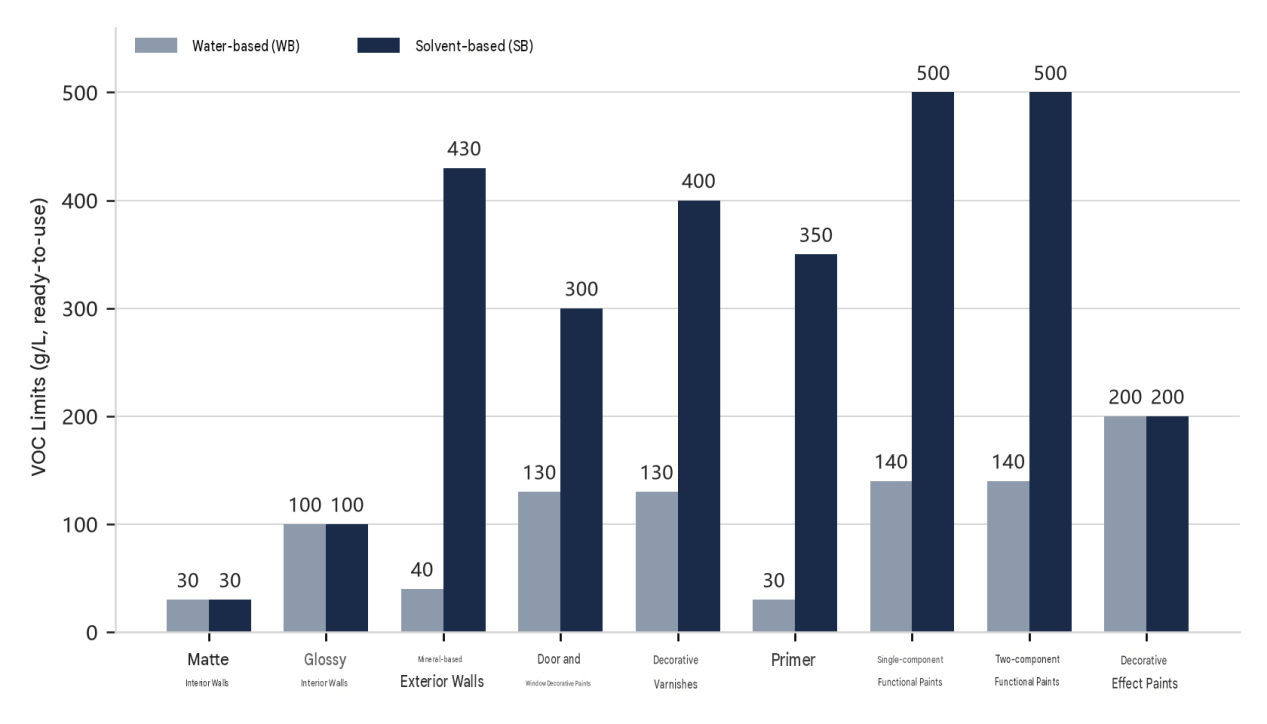
Figure 1: EU Phase II VOC Limits for Decorative Paints and Varnishes: Comparison Between Water-borne and Solvent-borne Systems
Source: Directive 2004/42/EC, Annex II; limits apply to products in a ready-to-use state; units in g/L
3.2 PFAS: From Scientific Assessment to Decision-Making
The proposal for a universal restriction on per- and polyfluoroalkyl substances (PFAS) has been one of the most significant developments concerning chemical additives over the past five years. On January 13, 2023, the competent authorities of Denmark, Germany, the Netherlands, Norway, and Sweden submitted a proposal to the European Chemicals Agency (ECHA) covering all uses of PFAS. A public consultation held between March 22 and September 25, 2023, generated a record number of comments.
The assessment process reached a critical juncture in 2026. On March 2, 2026, the Committee for Risk Assessment (RAC) adopted its final opinion, concluding that PFAS pose an ever-increasing risk to human health and the environment; it determined that existing measures are insufficient to control emissions and that restrictive action at the EU level is necessary. On March 10, the Committee for Socio-economic Analysis (SEAC) formulated a draft opinion, suggesting that targeted derogations for specific uses are required to ensure the proportionality of the restrictions. Both opinions were published on March 26, and the SEAC draft entered a 60-day consultation period, concluding on May 25, 2026. The SEAC is expected to adopt its final opinion by the end of 2026, after which the opinions will be formally submitted to the European Commission. The Commission will then develop a restriction proposal for discussion and a vote by the REACH Committee (Source: ECHA, March 3, March 11, and March 26, 2026).
The timeline carries direct implications for Chinese additive manufacturers. While there is typically a one-to-two-year legislative and transition period between the submission of a proposal and the formal implementation of restrictions, downstream customers often initiate formulation shifts much earlier. In sectors with long product lifecycles—such as automotive, electronics, and construction—manufacturers are generally unwilling to alter formulations on the eve of a regulation taking effect. Consequently, the critical window for action begins the moment customers start requesting "fluorine-free" declarations, rather than on the actual date the regulations come into force.
The impact on specific additive categories is concentrated on fluorinated surfactants. Fluorinated leveling agents, wetting agents, anti-scratch agents, and certain defoamers—which have long relied on the ultra-low surface tension provided by fluorocarbon chains—occupy an irreplaceable role in high-end solvent-borne coatings, UV-curable systems, and electronic coatings. There are three primary alternative approaches: organosilicon compounds (polysiloxanes and their derivatives) offer low surface tension and slip, though they may compromise recoatability or increase the risk of surface defects like "fish-eyes" (craters); polyethers and polyacrylates provide superior leveling through better compatibility, but are less effective at reducing surface tension; and waxes or nanomaterials can provide scratch and stain resistance, though often at the expense of transparency and gloss. None of these alternatives serve as a perfect, like-for-like replacement; formulators must therefore recalibrate their recipes to strike a new balance based on the specific performance requirements and potential defects involved.
3.3 North America: Inventory Management and the "California Standard"
In the United States, chemical management is centered on the Toxic Substances Control Act (TSCA). An inventory of existing chemical substances serves as the foundation for market access, while new substances are subject to a Pre-Manufacture Notice (PMN) process. Of particular significance to additives is the Significant New Use Rule (SNUR), which brings new uses of certain known substances under the scope of regulatory notification, thereby closing a potential oversight gap regarding "new uses for existing substances."
PFAS management in the U.S. follows a distinct path. Under Section 8(a)(7) of the TSCA, the Environmental Protection Agency (EPA) established a reporting rule for PFAS, requiring manufacturers and importers to submit data on the uses, production volumes, and exposure information for specific PFAS substances. Given the broad scope of this rule, many downstream users of fluorine-containing additives have received inquiries from their upstream suppliers.
At the state level, regulations concerning Volatile Organic Compounds (VOCs) are often more stringent than federal requirements. For instance, Rule 1113 of the South Coast Air Quality Management District (SCAQMD) in California sets VOC limits for architectural coatings by category—with some limits even stricter than those mandated by European Union directives. Meanwhile, New York and various Northeastern states have adopted a separate framework based on the Ozone Transport Commission (OTC) model rules. For coatings and additives exported to North America, California’s standards effectively serve as the benchmark—or "ceiling"—for formulation design. Furthermore, California’s Proposition 65 exerts pressure through labeling requirements: substances included on its list must carry warning labels, even if they are not subject to any federal-level restrictions.
3.4 China: A Three-Pronged Approach—Registration, Mandatory Standards, and Taxation
China’s regulatory framework consists of three pillars. The *Measures for the Environmental Management Registration of New Chemical Substances* (Order No. 12 of the Ministry of Ecology and Environment), which took effect on January 1, 2021, mandates a registration system for new chemical substances not included in the existing inventory. Depending on their hazard profiles, these substances are subject to either "regular registration," "simplified registration," or "filing" (notification). For additive manufacturers developing new monomers or polymers, this is the first hurdle that cannot be bypassed; the time required for registration and the associated testing costs must be factored in during the product planning phase.
Mandatory national standards constitute the second threshold. Standards such as GB 30981-2020 (*Limit of Harmful Substances in Industrial Protective Coatings*), GB 18581-2020 (*Limit of Harmful Substances in Coatings for Woodenware*), GB 18582-2020 (*Limit of Harmful Substances in Architectural Wall Coatings*), and GB 38468-2019 (*Limit of Harmful Substances in Interior Flooring Coatings*) impose limits on substances including VOCs, benzene-series compounds, heavy metals, and free diisocyanates. These limits vary by product category and system—with specific requirements for water-borne, solvent-borne, and solvent-free formulations. While additives themselves are not directly governed by these standards, the solvents, residual monomers, or heavy metals they introduce can affect the test results of the final product; therefore, these factors must be carefully calculated during the additive selection process.
The third pillar involves taxation and emissions constraints. Environmental protection taxes and the management of VOC emissions have made the costs associated with solvent use explicit. This has improved the economic viability of low-VOC coatings, providing a dual impetus—driven by both policy and cost considerations—for the adoption of water-borne, powder, and high-solids coating systems. This factor exerts a more enduring influence on the demand structure for additives than regulatory restrictions alone.
3.5 Other Regions: Divergence Amidst Convergence
Japan’s Chemical Substances Control Law (CSCL) mandates pre-market review for new chemical substances and includes a periodic safety assessment mechanism for existing substances; its overall approach is similar to that of the EU, though the pace of implementation is more measured. South Korea’s K-REACH has progressively expanded its registration scope and information requirements, narrowing the gap with the EU framework. In India and Southeast Asia, chemical management frameworks are still taking shape; some nations have already introduced draft chemical regulations, though their formal implementation timelines and specific requirements warrant ongoing monitoring. In many markets across the Middle East, Latin America, and Africa, compliance documentation from the EU or the US often serves as a de facto "passport" for market entry.
These regional variations create practical operational challenges: for a single additive, the requirements can differ significantly—ranging from a full registration dossier and an SVHC (Substances of Very High Concern) declaration in the EU, to TSCA inventory verification and PFAS reporting in the US, new chemical substance registration or inventory confirmation in China, or potentially just a Safety Data Sheet (SDS) in parts of Southeast Asia. These differences in documentation requirements naturally lead to variations in compliance costs. For regional manufacturers, a pragmatic strategy is to first build a reputation for the product in markets with less stringent regulatory demands, and subsequently fulfill the more rigorous documentation requirements for other regions. Conversely, entering high-standard markets first entails a longer period of upfront investment.
3.6 Where Do Compliance Costs Go?
Compliance costs manifest in three primary areas; understanding these is far more useful than simply memorizing legal statutes.
The first area is data. Registration dossiers, toxicological and ecotoxicological testing, and exposure assessments all require significant financial investment. A complete registration package for a single substance can cost anywhere from hundreds of thousands to millions of RMB and take years to finalize. For additive manufacturers dealing with a wide variety of products in smaller volumes, these costs cannot be easily amortized across individual items; instead, they must be absorbed through the product portfolio and long-term sales volume.
The second area is the validation of substitutes. When a substance is restricted, replacing it is not as simple as a direct swap; it necessitates re-validating formulations, conducting stability and application testing, and securing customer approval. In sectors like automotive and electronics, this certification process often exceeds a year—a period during which supply relationships and formulation versions must remain frozen.
The third area concerns supply chain information. Requirements such as the communication of SVHC (Substances of Very High Concern) data, SCIP notifications, and PFAS usage declarations demand close coordination across the entire supply chain. Additive manufacturers find themselves in the middle of this information flow—obligated to provide ingredient details to downstream customers while simultaneously requesting substance-specific data from upstream suppliers. If any party fails to cooperate, the entire compliance chain breaks down.
Collectively, these three types of costs raise the barriers to market entry. Markets that were once accessible based solely on price and responsiveness now demand an additional capability: "regulatory documentation proficiency." We believe that over the next five years, the divergence among additive suppliers will likely not be driven by differences in synthesis technology, but rather by the speed at which they can accumulate regulatory data.
4 General Overview of Mechanisms: Six Fundamental Themes
While there is a vast array of additives, their underlying mechanisms can be categorized into a few fundamental themes. Rather than providing an exhaustive, encyclopedic list, this chapter focuses on clarifying the essential physicochemical principles that will be revisited throughout the subsequent chapters—including surface energy and wetting, adsorption and stabilization, the formation and rupture of bubbles, shear rate and rheology, surface tension gradients and leveling, as well as the interactions involved in film formation and crosslinking.
4.1 Surface energy and wetting: first look at the "temper" of both sides
The essence of wetting is the ability of a liquid to spread on a solid surface. For a liquid to spread, its surface tension must be lower than the surface energy of the substrate. The greater the difference between the two, the easier it is to spread. The surface tension of water is about 72 mN/m at 20°C, and that of most organic solvents is between 20 and 40 mN/m. This is why solvent-based systems rarely worry about wetting, while water-based systems require a wetting agent in almost every formula.
The surface energies of substrates vary widely. Inorganic substrates such as metal, glass, and ceramics have high surface energy, and water and solvents can spread easily. The surface energy of polyethylene and polypropylene is around 30 mN/m, while that of polytetrafluoroethylene is only about 18 mN/m. When water-based coatings are applied to these plastic parts, shrinkage and bottom exposure will almost inevitably occur without the addition of wetting agents. The situation of wood is more complicated. The difference in density, moisture content, and extractive content between early wood and late wood will cause the local surface energy to fluctuate. It is common for uneven wetting to occur on the same board.
The function of the wetting agent is to reduce the surface tension of the liquid below the surface energy of the substrate. Organic silicones can reduce the surface tension to around 20 mN/m, acetylene glycols around 30 mN/m, and polyethers depend on the EO/PO ratio. The lower it drops, the stronger the wetting ability and the greater the side effects: too low surface tension will make the paint film more easily repelled by pollutants and cause shrinkage cavities; excess silicon will also affect interlayer adhesion. This balance is what Chapter 7 will expand on.
4.2 Adsorption, Anchoring, and Stabilization: The Three Functions of Dispersants
Pigment dispersion can be broken down into four stages: wetting, deagglomeration, stabilization, and homogenization. Wetting involves the liquid displacing air and moisture from the pigment surface; deagglomeration uses mechanical force to break apart pigment aggregates; stabilization prevents the dispersed particles from re-aggregating; and homogenization ensures an even distribution of particles throughout the system. Dispersants primarily function during the wetting and stabilization stages, while deagglomeration relies on processing equipment, and homogenization depends on rheology.
The molecular structure of a dispersant can be broadly divided into two components: anchoring groups and solvating chains. Anchoring groups—common examples include carboxyl, amine, amide, sulfonic acid, and phosphate ester groups—are responsible for adsorbing onto the pigment surface. Solvating chains extend into the surrounding medium, creating steric hindrance. If the wrong anchoring group is chosen, adsorption will be weak, causing the dispersant to gradually detach after the milling process, which leads to particle coarsening and sedimentation. Conversely, if the solvating chains are too short, the resulting steric barrier will be insufficient; as particles approach one another, van der Waals forces will dominate, inevitably resulting in flocculation.
The surface properties of a pigment determine its anchoring mechanism. Titanium dioxide (TiO₂) surfaces feature hydroxyl groups; consequently, carboxylic acid and phosphate ester groups are effective for anchoring under acidic to neutral conditions. Carbon black, characterized by low surface energy and high porosity, requires structures with a higher anchoring density; low-molecular-weight dispersants containing amine or amide groups are typically used for fine-particle carbon black. Organic pigments (such as phthalocyanine blue or azo red) possess moderate surface polarity, necessitating anchoring groups that match this polarity—using the wrong type often results in a scenario where "dispersant is added, but the desired fineness is not achieved." Aluminum pigments and pearlescent pigments present different requirements, focusing on orientation and encapsulation rather than simple deagglomeration.
There are two primary stabilization mechanisms. Electrostatic repulsion relies on the mutual repulsion of like charges on particle surfaces; while effective in aqueous systems, it is highly sensitive to pH and ionic concentration. A zeta potential with an absolute value of 30 mV is generally used as a threshold—stability begins to decline when the value falls below this. Steric hindrance relies on the physical barrier provided by solvated chains; this is the dominant mechanism in solvent-borne and high-solids systems. It requires chains of sufficient length that are compatible with the system without being completely dissolved within it. These two mechanisms can also be combined; in aqueous systems, high-molecular-weight block copolymers often provide both simultaneously.
Calculating dosage is an aspect of the process where errors frequently occur. The amount of dispersant to be added should be determined based on the pigment's specific surface area, rather than as a percentage of the pigment's weight. For any given kilogram of pigment, the specific surface area can range from over ten square meters per gram to several hundred square meters per gram—a difference that can lead to a tenfold variation in the required amount of dispersant. Relying on weight-based percentages is inefficient: it leads to waste when used for pigments with a low specific surface area, and results in an insufficient amount when used for those with a high specific surface area. While this principle is straightforward, it is often overlooked during formula transfers or when switching pigments.
4.3 The Life Cycle of a Bubble: Nucleation, Ascent, Drainage, and Rupture
Foam in coatings does not appear out of thin air. It requires three simultaneous conditions: the presence of surface-active substances within the system, a continuous liquid film encapsulating the gas, and a sufficient amount of gas dispersed throughout the liquid phase. Dispersants, wetting agents, emulsifiers (found in emulsions), and thickeners all contribute surface-active substances, while processes such as stirring, pumping, grinding, and spraying introduce gas and shear forces.
The life cycle of a bubble consists of several stages. In the nucleation stage, gas forms tiny bubbles within the liquid phase; these have small diameters and high internal pressure, making them prone to dissolving back into the liquid. During the ascent stage, bubbles rise due to buoyancy—a process influenced by the system's viscosity and the bubble diameter. In highly viscous systems, microbubbles may remain suspended for months without ever reaching the surface. In the drainage stage, the liquid film surrounding the bubble thins under the influence of gravity; however, the Marangoni effect—driven by surfactants—can hinder this drainage, helping the film maintain its thickness. Finally, in the rupture stage, the film either breaks once it reaches a critical thinness or is destroyed by the action of a defoamer.
Factors that stabilize foam are often more worthy of study than those that promote defoaming. Foam stability is enhanced by low surface tension, high surface viscosity, and good elasticity of the foam lamellae. When conditions such as high solids content, high viscosity, low-temperature application, and a high concentration of surfactants coincide, eliminating foam becomes extremely difficult. In waterborne industrial coatings, the prevalence of micro-bubbles during low-temperature application is usually not due to the wrong choice of defoamer, but rather to high system viscosity, which prevents the bubbles from escaping.
Defoaming and deaeration (bubble removal) are distinct processes. Defoaming targets foam already present at the liquid surface; it works by allowing the defoamer to penetrate and spread, thereby rupturing the foam lamellae. Deaeration, by contrast, addresses micro-bubbles dispersed within the liquid phase; it functions by locally lowering surface tension, which encourages micro-bubbles to coalesce into larger bubbles, accelerating their rise to the surface. Attempting to resolve micro-bubble issues solely with a defoamer often leads to surface oiliness or "fish-eyes" (craters), while the micro-bubbles themselves remain. Distinguishing between these two concepts can save a significant amount of trial-and-error effort.
4.4 Shear Rate Is Everything: A Practical Perspective on Rheology
The viscosity of a coating is not a constant; it varies with the shear rate. Each stage of the application process corresponds to a specific shear range: during static storage, the shear rate is near zero, and pigments and fillers are kept in suspension through a yield value; during pouring and stirring, the shear rate is moderate, requiring a viscosity low enough to allow for flow; during brushing or roller application, the shear rate is higher, necessitating a viscosity low enough to ensure proper spreading; and during spray atomization, the shear rate is extremely high, requiring a viscosity low enough to facilitate effective atomization.
The role of rheology modifiers is to "distribute" viscosity across these various ranges. In the low-shear range, a yield value is required to prevent the settling of pigments and fillers, as well as the sagging of the wet film. In the medium-shear range, the viscosity must not be too high; otherwise, leveling will be poor and brush marks will be pronounced. In the high-shear range, the viscosity must be low to ensure smooth application and proper atomization. Thixotropic agents—such as organoclays, fumed silica, and polyamide waxes—form a network structure under low-shear conditions; this network breaks down under high shear and gradually recovers once the shear force is removed, perfectly aligning with these requirements. Associative polyurethane thickeners and alkali-swellable thickeners are primarily used in waterborne systems; they form networks through associations with emulsion particles and surfactants, making them particularly effective for regulating viscosity in the medium- to high-shear ranges.
The relationship between rheology and additives is often overlooked. Dispersants reduce pigment agglomeration, which in turn alters the yield value of the system; leveling agents modify surface tension, affecting the internal flow of the wet film; and defoamers—if poorly compatible—can create localized points of low surface tension, leading to uneven flow. A formulation is an interconnected network: adjusting one node inevitably causes shifts in others.
4.5 Surface Tension Gradients and Leveling: Why Brush Marks Persist in Paint Finishes
Once a wet film is applied, surface tension acts as the driving force for leveling. If temperature or concentration variations occur across the surface of the paint film, local surface tension gradients emerge. Liquid flows from areas of lower surface tension toward areas of higher surface tension, creating Bénard cells (vortices). While these vortices can assist in the leveling process, they also transport pigments of varying densities to the surface, leading to issues such as pigment floating and flooding (mottling).
According to the Orchard model, the time required for leveling is proportional to the fourth power of the wavelength, and inversely proportional to the first power of the surface tension and the third power of the film thickness. This relationship explains several common phenomena: short-wavelength defects—such as "orange peel"—level out more easily than long-wavelength defects like brush marks; thicker films level better than thinner ones; and systems with high surface tension exhibit poorer leveling. The appearance of pronounced brush marks during winter application is due to a combination of adverse factors: increased viscosity, reduced film thickness, and accelerated drying.
The function of a leveling agent is not to "accelerate flow," but rather to "regulate surface tension." Polyacrylate-based leveling agents have limited compatibility with the system; they form a uniform molecular layer at the surface, which suppresses local surface tension gradients and promotes more even flow. Silicone-based leveling agents, by contrast, significantly lower the surface tension—effectively eliminating orange peel and imparting a smooth, slippery feel. However, an excess of these agents can drive surface tension too low, making the coating more susceptible to "crawling" (cratering) caused by surface contaminants. Since these two types of leveling agents address different issues, any decision to use them in combination should be based on a clear, specific objective.
4.6 Film Formation and Crosslinking: The Role of Additives During Curing
The challenges associated with additives often emerge during the curing stage. In waterborne systems, film-forming aids facilitate the deformation and coalescence of emulsion particles; insufficient dosage can lead to cracking, while an excess may prolong drying times and reduce hardness. In UV-curable systems, additives that absorb ultraviolet light compete with photoinitiators for energy, potentially resulting in inadequate curing of the underlying layers; meanwhile, silicon-based additives that migrate to the surface can hinder intercoat adhesion. In two-component polyurethane systems, moisture or alcohols introduced by additives can consume isocyanates, leading to incomplete curing and the formation of pinholes.
Additives for powder coatings must exist in solid form and be compatible with the resin powder. Leveling agents, degassing agents, and wax powders function within specific temperature windows during extrusion and curing; if the temperature profile is incorrect, these additives will fail to perform. A unique aspect of this system is the absence of a solvent carrier, meaning additives can only disperse while in a molten state.
Understanding these interactions is far more valuable than simply memorizing product classifications. Additives are not independent variables that function automatically upon addition; rather, they are part of a coupled system—comprising resins, curing agents, pigments, fillers, and application conditions—where a change in any single component will alter the additive's performance.
5 Foam: Formation Conditions, Stabilization Factors, and Structural Selection of Defoamers
Foam is a relatively common defect encountered during the application of coatings, and it is also one that is frequently misidentified. Its root cause does not lie in the defoamer itself, but rather in the surface-active substances present throughout the system, the system's viscosity, and the application method employed. This chapter begins by clarifying the origins of foam and the conditions that stabilize it, before moving on to discuss the structure and selection of defoamers.
5.1 Where Does Foam Come From? Three Sources, One Common Characteristic
Surface-active substances in coatings originate from four sources. Dispersants and wetting agents are the most direct contributors; while their primary function is to lower surface tension, a side effect is the stabilization of gas-liquid interfaces. Emulsifiers introduced via emulsions constitute the second source—much of the foam stability issue in waterborne latex paints stems from this. Since the type and dosage of emulsifiers are determined during the emulsion manufacturing process, paint producers have little choice but to accept them as they are. Thickeners represent the third source; associative polyurethane thickeners and alkali-swellable thickeners, while effective at increasing low-shear viscosity, also heighten the resistance to liquid drainage from foam films. The fourth source arises during the application phase: atomizing airflow in spray painting, air entrapment during roller application, and shear forces generated during grinding or pumping all force air into the liquid phase.
These four sources share a common characteristic: they all hinder the drainage of liquid from foam films. For a foam film to rupture, it must first thin out; however, the Marangoni effect—driven by surfactants—prevents liquid from flowing out of the film, causing it to maintain its thickness. Higher viscosity further slows down drainage, extending the time that bubbles persist within the system. This explains why foam is particularly difficult to eliminate in high-solids systems, high-viscosity waterborne industrial coatings, and applications carried out in low-temperature environments.
5.2 Three Conditions and Four Structural Categories of Defoamers
For a defoamer to be effective, it must satisfy three conditions simultaneously: it must be incompatible with the system, capable of penetrating the foam lamella (film), and able to spread across that film. Incompatibility is the prerequisite; an additive that is completely compatible will simply dissolve into the liquid phase and never reach the foam film. Conversely, excessive incompatibility can lead to defects such as craters or oil spots. Penetration and spreading determine the rate of foam rupture; when the spreading coefficient is positive, defoamer droplets spread rapidly across the surface of the foam film, thinning the local liquid layer until it ruptures.
Based on their chemical structure, defoamers are generally classified into four categories. Polysiloxanes are highly effective at breaking foam; polydimethylsiloxane (PDMS), which has a surface tension of approximately 21 mN/m, can be combined with hydrophobic silica particles to significantly enhance its defoaming efficiency. In water-based systems, these are typically formulated as emulsions, where the particle size and the choice of emulsifier dictate their compatibility. Polyethers offer better compatibility; the block ratio of ethylene oxide to propylene oxide determines their hydrophilic-lipophilic balance. While their foam-breaking capacity is lower than that of silicones, they provide longer-lasting foam suppression, making them suitable for systems that demand high surface quality. Mineral oils and waxes are cost-effective and highly versatile, finding widespread use in architectural coatings and general industrial paints; however, they tend to lose effectiveness in high-temperature environments or systems containing strong solvents.
The fourth category consists of composite types, which combine silicone-based agents with polyethers, or blend silicones with hydrophobic particles and emulsifiers. The objective here is to strike a balance between the speed of foam breaking and overall system compatibility.
Another specialized type is the "deaerator" (or air-release agent). Rather than focusing on breaking foam at the liquid surface, these agents lower the local surface tension within the system, causing microbubbles to coalesce into larger bubbles, which then rise to the surface more rapidly. In high-solids coatings, solvent-free epoxy flooring, and thick-film industrial paints—where microbubbles are the primary concern—deaerators are a more effective solution than standard defoamers.
5.3 System-Dependent Variations: Why an Antifoam May Fail in a Different Medium
In waterborne systems, the primary challenge for defoaming lies in emulsion stability. Silicone-based antifoams rely on emulsifiers to remain dispersed within the aqueous phase; if the emulsifier is poorly chosen, the antifoam may undergo phase separation during storage or precipitate as an oily film during application. Waterborne industrial coatings have stricter compatibility requirements than architectural coatings—due to their greater film thickness and higher aesthetic standards, even a trace of surface oil can lead to the formation of "fish eyes" (craters). Best practices involve selecting products with fine particle sizes and emulsification systems compatible with the coating’s resin emulsion. It is also advisable to split the dosage: add a portion during the grinding stage to manage process-related foam, and add the remainder during the final paint-mixing stage to control foam in the finished product.
In solvent-borne systems, the challenge is the opposite: excessive compatibility. The resins and solvents can dissolve the antifoam; therefore, silicone-based antifoams must be used in the form of high-concentration silicone pastes or pure silicone oils to ensure a degree of localized incompatibility. For high-solids solvent-borne systems, one must also consider the impact on gloss—an excess of silicone can cause surface haze.
UV/EB-curable systems present unique constraints. Silicone components in an antifoam can migrate to the coating surface, impairing intercoat adhesion and subsequent coating layers. Furthermore, some antifoams may absorb UV radiation, competing with the photoinitiators for energy. When selecting an antifoam for UV formulations, preference is typically given to silicone-free polyether or acrylate types. The dosage should be kept to the minimum level required to eliminate bubbles, ensuring that surface appearance is not achieved at the expense of proper curing.
For industrial thick-film coatings and flooring systems, the focus must be on "deaeration" (air release). Solvent-free epoxy systems, characterized by high viscosity and significant film thickness, often trap air bubbles deep within the film, where surface-acting antifoams cannot reach. Such systems require deaerators capable of penetrating the coating to facilitate the rise of bubbles to the surface, supplemented by the use of spiked rollers (deaeration rollers) during application and an appropriate induction (maturation) period.
5.4 Misdiagnoses: Three Common Errors
The first error is mistaking pinholes for craters. Pinholes are caused by air bubbles that burst during the drying process, leaving behind holes that may penetrate the entire film or only part of it; craters are circular depressions resulting from surface tension differentials. Since their root causes differ, the approaches to addressing them must also differ. For pinholes, one should investigate the source of the air bubbles and the effectiveness of the defoamer; for craters, one should look for contaminants, silicone residues, or excessively low surface tension. Attempting to treat craters with more defoamer usually makes the problem worse.
The second error is assuming that a higher dosage of defoamer is always better. The effective dosage range for a defoamer is quite narrow; once a certain concentration is exceeded, its ability to break bubbles plateaus, while its side effects—such as craters, oil-like surface films, reduced adhesion, and poor recoatability—increase exponentially. Formulators, thinking that "just a little more" is needed, may repeatedly increase the dosage, ultimately transforming a minor appearance issue into a much more severe one.
The third error is overlooking the method of addition and the temperature. Adding a defoamer at high temperatures can cause an emulsion system to break; adding too much during the grinding stage can lead to the defoamer being adsorbed by pigments or fillers, rendering it ineffective; and adding the entire amount at once during the paint-blending stage can create localized high concentrations, resulting in craters. Factors such as staged addition, temperature control, and ensuring thorough, uniform dispersion are often overlooked—yet they are the very areas where problems most frequently arise.
5.5 Alternative Pathways in the Shift Away from Fluorinated Additives
Fluorinated defoamers have historically held a niche in high-end solvent-borne coatings and electronic coatings, valued for their exceptionally low surface tension and potent foam-breaking capabilities. With the tightening of regulations on PFAS, this approach is being phased out. There are three primary alternatives: increasing the hydrophobic particle content in silicone-based defoamers or utilizing more efficient silicone pastes; employing polyether-modified siloxanes, which balance foam-breaking efficacy with compatibility; or, in the case of UV-curable and electronic coating systems, transitioning to silicone-free polyethers or acrylates.
It is important to recognize that these alternatives are not direct, equivalent replacements. Fluorinated additives offer even lower surface tension than silicone-based counterparts; consequently, in applications involving low-surface-energy substrates or ultra-thin films, silicone-based alternatives may fail to match the foam-breaking speed of the original fluorinated products. Formulators must accept that such a transition may narrow the application window, necessitate adjustments to drying conditions, and require a re-evaluation of appearance specifications. Communicating these expectations to clients in advance is far more constructive than attempting to explain defects after they have already occurred.
6 Dispersion: Pigment Wetting, Anchoring Groups, and the Molecular Design of Polymeric Dispersants
Dispersion represents a highly technical aspect of additive technology and is a key area where formulations often diverge significantly. A dispersant that performs well with titanium dioxide may prove completely ineffective with carbon black; one that provides stability in a solvent-borne system might lead to phase separation within a single day when used in a water-borne system. This chapter explores the molecular design and practical selection of dispersants, beginning with an analysis of pigment surface properties.
6.1 The Four-Step Process and the Roles of Processing Equipment
The dispersion process consists of four steps: wetting and deagglomeration (primarily occurring during the initial dispersion phase), stabilization (achieved via dispersants), and homogenization (governed by rheology). This functional division dictates the approach to process design: the shear force during the dispersion phase must be sufficient to break apart pigment agglomerates; the energy applied during the milling phase must be adequate to reduce particle size to the target fineness; and the rheological properties during the final paint-adjustment phase must be sufficient to keep the particles suspended and stable.
The specific roles of various pieces of equipment are frequently misunderstood. High-speed dispersers primarily exert shear within the liquid phase; their capacity for breaking down agglomerates is limited, making them best suited for pre-dispersion and wetting. Bead mills (or sand mills) utilize the collision and shear forces of grinding media to reduce particle size to the sub-micron range. Three-roll mills rely on the shear forces generated within the gaps between rollers and are ideal for high-viscosity pastes. Attempting to achieve the fineness produced by a bead mill using only a high-speed disperser is inefficient in terms of both energy consumption and time; conversely, using a bead mill for pre-dispersion is equally inefficient. If the process sequence is incorrect, even the best dispersant cannot compensate for the failure.
6.2 Pigment Type Determines the Anchoring Mechanism
Surface properties vary significantly among different pigments; therefore, the selection of a dispersant must be based on these differences. Table 2 outlines the typical correspondence between common pigment types and dispersant structures. This table is an empirical summary rather than an absolute rule; the final selection should also take into account the specific resin system and application conditions.
Table 2: Correspondence between common pigment types and dispersant structures
Pigment Type | Surface characteristics | Applicable anchoring groups | Important Notes |
Rutile-type titanium dioxide | Surface contains hydroxyl groups; ranges from slightly acidic to neutral. | carboxyl group, phosphate ester group | The type of inorganic coating influences adsorption; differences exist between the chloride process and the sulfate process. |
Anatase-type titanium dioxide | Higher surface activity, relatively high oil absorption capacity | carboxyl group, phosphate ester group | Determine the dosage based on specific surface area, rather than estimating it by weight. |
Carbon black | Low surface energy, high porosity | Amino groups, amide groups, high anchoring density | Small-particle-size carbon black requires a high-molecular-weight dispersant; otherwise, it will undergo re-coarsening. |
Organic pigments (phthalocyanines, azo compounds) | Moderate surface polarity | Anchoring groups with polarity matched to the pigment | When anchor types are mismatched, it is difficult to achieve a finer level of granularity. |
Iron oxide-based pigments | Strong surface polarity | carboxyl group, sulfonic acid group | High density; requires an anti-settling system. |
Aluminum powder, pearlescent pigments | Plate-like structure; requires directional alignment. | Phosphate ester group, special coating | The focus is on arrangement and encapsulation, not on deaggregation. |
Fillers (calcium carbonate, talcum powder) | Significant difference in specific surface area | General-purpose carboxylic acid dispersant | The dosage varies significantly with specific surface area. |
Source: Summarized from practical experience in paint formulation; provided for selection reference only and does not constitute a recommendation for any specific product.
A frequently overlooked aspect is the practice of calculating dosage based on specific surface area. Data on specific surface area provided by pigment suppliers is often incomplete, leading formulators to rely on empirical percentage-based additions. This frequently results in over-dosage for fillers with low specific surface areas and under-dosage for materials like carbon black, which have high specific surface areas. A practical approach is to first generate an adsorption curve using a small-scale sample to identify the inflection point—the stage beyond which further refinement (reduction in particle size) no longer occurs—and then use this to calculate the dosage for the production formulation.
6.3 Floating and Flooding: More Than Just a Dispersant Issue
Floating and flooding are relatively common in mixed-pigment coatings, particularly in gray or light-colored systems—such as those combining titanium dioxide with carbon black or organic pigments. These phenomena manifest as hexagonal convective patterns on the paint film surface, or as an overall color shift toward one of the pigments.
The root cause is the formation of Bénard cells. As a wet film dries, solvent evaporates from the surface, leading to a drop in both temperature and concentration. This causes a localized increase in surface tension, triggering a flow of liquid from the bottom toward the surface—creating convective cells. These cells transport pigments—which vary in particle size, density, and surface properties—to the surface. Pigments with smaller particle sizes and lower densities, such as carbon black, are more easily transported to the surface, resulting in the visible effects of floating and flooding.
Several strategies can be employed to address this. Increasing the low-shear viscosity of the system—typically through the use of rheology modifiers—hinders the formation of convective cells. Alternatively, using controlled-flocculation dispersants can promote the formation of stable co-flocculated structures among different pigments, thereby reducing separation. Leveling agents can also be added to suppress surface tension gradients. Furthermore, ensuring that each pigment paste is properly dispersed during the grinding stage—rather than co-grinding all pigments together—helps prevent disparities in particle size distribution. Relying on a single additive is rarely sufficient; an effective solution usually requires a combination of these approaches.
Another frequently overlooked factor is the resin itself. A resin’s acid value, molecular weight, and compatibility with the solvent system all influence how pigments are adsorbed and how they move within the coating. If floating or flooding reappears after switching resins, the issue often lies with the resin rather than the additives.
6.4 Flocculation, Sedimentation, and Re-coarsening: Distinguishing Between Three Types of "Aggregation"
Flocculation, sedimentation, and re-coarsening are related yet distinct phenomena, each requiring a different approach.
Flocculation refers to the re-aggregation of particles within a system into loose clusters. While it may not immediately manifest as an increase in measured particle size (coarsening), it often leads to reduced hiding power, lower gloss, and color shifts during storage. Flocculation can be categorized into two types: detrimental flocculation, where particles aggregate haphazardly, broadening the particle size distribution; and controlled flocculation, where particles form a uniform network structure—a state that can actually help prevent sedimentation and pigment floating. The choice of dispersant determines which of these outcomes occurs.
Sedimentation is the downward movement of particles under the influence of gravity, governed by Stokes' Law: the sedimentation rate is directly proportional to the square of the particle size and the density difference, and inversely proportional to the viscosity. There are two primary strategies to prevent sedimentation: reducing particle size or increasing low-shear viscosity. The former is achieved through effective dispersion and milling, while the latter relies on rheological additives. Both approaches should be used in tandem; focusing solely on particle size without establishing a yield value will still result in sedimentation after several months of storage, whereas focusing only on yield value—while ensuring an appealing appearance upon opening the container—will lead to poor leveling during application.
Re-coarsening occurs when a dispersant detaches from the pigment surface, causing particles to re-aggregate. This manifests as an increase in particle size and a loss of gloss during storage. Potential causes include weak anchoring of the dispersant, insufficient dosage, the displacement of the dispersant by solvents or resins, or excessively high storage temperatures. Re-coarsening is more challenging to address than flocculation because it typically occurs during storage—meaning a product might pass quality control at the factory, only for the issue to emerge once it reaches the customer. Prevention involves selecting dispersants with strong anchoring capabilities and conducting accelerated storage tests to identify and mitigate such risks early on.
6.5 Process Parameters: Key Factors in the Dispersion Phase
Dispersion outcomes depend not only on the dispersant but also, crucially, on process parameters. The particle size of the grinding media, the filling ratio, the linear velocity, and the material temperature collectively determine the energy input and the lower limit of the achievable particle size. If the grinding media particles are too large, the collision energy is high, but dispersion uniformity suffers; if they are too small, the density of shear points increases, but the energy at each individual point becomes insufficient. An excessively high filling ratio leaves insufficient space for the slurry to pass between the media, while a ratio that is too low reduces the probability of collisions. Linear velocity dictates shear intensity; however, an excessively high velocity causes the material temperature to rise, which can lead to the degradation of heat-sensitive resins and certain additives.
Material temperature is a frequently overlooked factor. While an increase in temperature lowers viscosity—thereby improving dispersion—it also accelerates the desorption of dispersants, which can cause the particles to re-agglomerate (coarsen). In aqueous systems, temperature can also affect the stability of emulsions. In practical production, it is often the cooling efficiency of the bead mill—rather than the power rating of the equipment itself—that determines whether a higher linear velocity can be employed.
7 Surface Control: The Boundaries of Leveling, Wetting, Slip, Scratch Resistance, and Oil/Stain Resistance
Surface additives are among the most intuitive components in a formulation, as they directly alter the appearance and tactile feel of a paint film. They are also prone to being overdosed; since each additive offers an appealing, immediate sensory effect, combining several can cause their respective side effects to compound. This chapter clarifies the functional boundaries of five categories of surface additives.
7.1 Wetting Agents: Ensuring Proper Spreading
Wetting agents serve two primary purposes. The first is substrate wetting, which addresses the challenge of ensuring a coating spreads effectively over low-surface-energy substrates—such as plastic components, oil-contaminated surfaces, recycled materials, or existing paint films. The second is pigment wetting, which assists dispersants by rapidly displacing air and moisture from pigment surfaces, acting as an auxiliary agent during the dispersion process.
Selecting a substrate-wetting agent involves evaluating three key parameters: the extent to which it can lower surface tension, its dynamic wetting capability, and its compatibility with the overall system. Low static surface tension does not guarantee effective dynamic wetting; during high-speed application, the interface is constantly being renewed, requiring the wetting agent to migrate rapidly to these new interfaces. Silicone-based additives offer excellent dynamic wetting but can impair adhesion if used in excess. Acetylenic diol-based additives provide both dynamic wetting and low-foaming properties, making them common choices for inkjet printing and high-speed roller coating. Polyether-based additives offer good compatibility but have a limited capacity to reduce surface tension, making them well-suited for systems that are highly sensitive to surface conditions.
7.2 Leveling Agents: Two Distinct Approaches
There are two technical approaches to leveling agents, each based on a different logic.
Polyacrylate-based agents follow a "limited compatibility" strategy. They are not fully miscible with the coating system, allowing them to form a uniform molecular layer at the film surface. This layer smooths out local surface tension gradients and suppresses Bénard cells, promoting more uniform flow. These agents are effective against orange peel and brush marks, though they cannot prevent craters (fish-eyes); furthermore, excessive dosage can lead to haze.
Silicone-based agents operate by "lowering surface tension." Polysiloxanes reduce surface tension to a very low level, resulting in a smooth film surface, the elimination of orange peel, and a slick tactile feel. A drawback is that such low surface tension makes the film more susceptible to craters caused by contaminants; additionally, residual silicone can impair intercoat adhesion. These agents are well-suited for applications where high-quality appearance and a smooth feel are required, provided that recoating is not necessary—for instance, in certain industrial topcoats or coatings for plastics.
While these two types can be combined, the objective for each must be clear. Silicones may be added to eliminate orange peel, while polyacrylates are used to suppress Bénard cells; each serves a specific function, and their dosages should be controlled accordingly. Simply layering both types together—treating them both merely as "leveling agents"—often results in the simultaneous appearance of craters and haze.
7.3 Smoothness, Scratch Resistance, and Oil/Smudge Resistance: Three Related Yet Distinct Requirements
Smoothness relates to tactile feel; scratch resistance pertains to durability against mechanical damage; and oil/smudge resistance involves the control of surface energy. While these three properties are interconnected, they cannot all be addressed by a single additive.
Smoothness is achieved by reducing the surface coefficient of friction—a function that both silicones and wax powders can perform. Silicones provide a pronounced "slippery" feel, though their durability depends on the specific formulation. Wax powders (such as polyethylene wax, PTFE wax, or amide wax) function by creating microscopic protrusions on the surface, which reduce the contact area; this improves both smoothness and scratch resistance, albeit at the cost of reduced gloss and clarity.
The mechanism behind scratch resistance is more complex, involving factors such as surface crosslink density, the hardness of fillers, and the migration of additives. Wax powders enhance scratch resistance because the particles absorb the stress from abrasive contact, whereas silicones improve it by facilitating surface slippage and reducing friction. Combining both can sometimes lead to interference; an excess of wax powder may hinder the migration of silicones to the surface.
Oil and smudge resistance (including resistance to fingerprints) is managed by regulating surface energy. Traditionally, this was achieved using fluoropolymers, which lower surface energy to such an extent that oils cannot easily adhere; however, this approach is currently being phased out. Alternatives include silicone-modified materials—which lower surface energy—and hydrophilic polymers, which make oils and smudges easier to wipe away. The methods for evaluating these two approaches differ: the former is assessed via contact angle measurements and "anti-graffiti" (stain-repellency) tests, while the latter is evaluated based on the number of cleaning cycles required and the amount of residue remaining.
7.4 The Boundary of Overlapping: Why Beneficial Additives Can Cancel Each Other Out
There is a counterintuitive principle regarding the combination of surface additives: while each individual additive may improve a specific performance metric, their combined effect can actually lead to a deterioration in overall quality. This occurs because they compete for the same space—the surface of the paint film.
Silicones, wax powders, acrylate-based leveling agents, and wetting agents all tend to migrate toward the surface. Those with stronger migration tendencies claim the surface, while those with weaker migration tendencies are pushed back into the bulk of the film. When combined, the composition of the surface becomes unpredictable, leading to fluctuations in appearance, reduced intercoat adhesion, and an increased risk of cratering.
To manage such combinations, one should limit the number of additives used and establish a clear hierarchy. A single formulation should generally contain no more than three surface additives, each with a distinct, defined role—for instance, one for wetting, one for leveling, and one for tactile properties or scratch resistance. Beyond three, marginal gains diminish rapidly, while side effects escalate. This empirical observation has been validated through extensive formulation development and should be treated as a fundamental rule.
8 System Adaptation: Five Logics, Five Sets of Constraints
The root causes of identical defects can vary significantly across different coating systems, necessitating distinct solutions. This chapter examines five categories—waterborne, solvent-borne, UV/EB-curable, high-solids, and powder coatings—addressing the specific constraints and key considerations for additive selection within each system.
8.1 Water-borne Systems: The Triple Challenge of Surface Tension, Foaming, and Drying Windows
The core challenge in water-borne systems stems from the high surface tension of water—72 mN/m. This makes wetting the primary hurdle; applying coatings to low-surface-energy substrates is virtually impossible without the use of wetting agents. However, lowering surface tension inevitably introduces foaming issues, as wetting agents are, by nature, surface-active substances.
Foaming represents the second major challenge. With emulsifiers from emulsions, associative structures formed by thickeners, and air introduced during application, foam becomes exceptionally difficult to eliminate. Defoamers must strike a delicate balance between "defoaming efficiency" and "compatibility"—silicone-based defoamers are highly effective but prone to causing surface defects like craters, while polyether-based alternatives offer better compatibility but weaker defoaming performance.
The drying window constitutes the third challenge. Water has a high latent heat of vaporization, resulting in slow drying. While film-forming aids facilitate the coalescence of emulsion particles, they also extend drying times and reduce final film hardness. Additives play an indirect yet critical role here: wetting agents influence coating uniformity, defoamers affect the formation of pinholes, and rheology modifiers dictate leveling and sag resistance. These components must be adjusted in tandem; focusing on only one often leads to new problems elsewhere.
Furthermore, the selection of dispersants for water-borne systems is constrained by the pH range. Anionic dispersants are stable under slightly alkaline conditions but tend to lose effectiveness in acidic environments. In water-borne systems neutralized with amines, the pH may drift during storage, which in turn compromises dispersion stability. This is one of the reasons why scaling up water-borne formulations is often more complex than for solvent-borne counterparts.
8.2 Solvent-borne Systems: Caught Between High Solids and Low VOCs
Solvent-borne systems are constrained by VOC limits. The limits outlined in Table 1 significantly narrow the available formulation space—particularly for architectural decorative coatings, where the VOC limit for flat interior paints has dropped to 30 g/L, effectively leaving water-borne systems as the only viable option. While limits for industrial coatings are somewhat more lenient, the overall trend remains the same.
A feasible approach is the development of high-solids formulations. Reducing solvent content while increasing the proportion of resins, pigments, and fillers leads to higher viscosity, which in turn compromises application properties. In this context, the role of dispersants shifts from "facilitating grinding" to "reducing viscosity"; high-molecular-weight dispersants enable pigments and fillers to maintain flow even at low solvent concentrations. Similarly, the function of rheology modifiers shifts from "preventing settling" to "preventing sagging"—a critical adjustment, as high-solids coatings produce thicker wet films with lower yield values, making them prone to sagging when applied to vertical surfaces.
Surface control is also more challenging in solvent-borne systems. Rapid solvent evaporation leaves little time for leveling, often resulting in "orange peel" or brush marks. While silicone-based leveling agents are effective, their residues can interfere with recoating. The industry standard for such systems is a "less is more" approach: using acrylate-based leveling agents to mitigate orange peel, while reserving silicone-based additives for limited, essential use only.
8.3 UV/EB: The Time Equation in Sub-Second Curing
UV-curable systems are solvent-free, with 100% solids content; their viscosity is determined by the monomers and oligomers present. Since curing occurs within seconds, the effective window for leveling is compressed into the brief interval—lasting only tens of seconds—between the application of the coating and its entry into the curing zone (under the lamps). This narrow timeframe dictates the selection and dosage of leveling agents: slow-acting agents may not have time to take effect, while fast-acting ones can easily induce surface defects.
The interaction between the curing process and additives is a unique challenge in these systems. Pigments absorb UV light; for instance, carbon black and titanium dioxide can cause significant shielding in thick films, leading to insufficient curing in the underlying layers. If additives also absorb UV light, this problem is further exacerbated. Certain chemical structures found in defoamers and leveling agents may absorb UV radiation, so it is essential to consult the absorption spectra provided by suppliers when selecting these components.
Oxygen inhibition at the surface presents another constraint. Atmospheric oxygen quenches free radicals at the surface, which can result in incomplete curing and a tacky (sticky) finish. If an additive lowers the surface tension too drastically, it may leave the surface more exposed to oxygen; conversely, some additives can form a protective layer on the surface, helping to mitigate oxygen inhibition. Achieving the right balance requires empirical testing.
8.4 High-Solids Systems: The Trilemma of Viscosity, Filler Loading, and Sag Resistance
In high-solids systems, three key variables are interdependent. Increasing the solids content raises viscosity; conversely, reducing viscosity requires more solvent, which in turn lowers the solids content. Increasing the loading of pigments and fillers improves opacity and cost-efficiency but compromises rheological properties. Additives serve to identify a viable balance within this trilemma.
The value of dispersants is amplified in such systems. High-molecular-weight block-copolymer dispersants can significantly reduce the apparent viscosity of pigments and fillers, enabling the formulation to remain applicable even with low solvent content. The dosage must be precisely calculated based on the specific surface area; an excess of dispersant can lead to an anomalous increase in viscosity due to the formation of inter-particle bridges.
Sag resistance is managed through rheological additives. Because high-solids coatings form thicker wet films—making them more susceptible to the effects of gravity—a specific low-shear yield value is required. Polyamide waxes, organoclays, and fumed silica can all provide this yield value. The choice depends on the specific system and application method: spray application requires rapid recovery of the yield value, while brush application demands good leveling; a balance between these requirements must be struck.
8.5 Powder Coatings: The Logic of Additives in the Absence of Solvents
Powder coatings are systems that lack a liquid-phase carrier; therefore, additives must be solid, compatible, and functional in a molten state. Such systems utilize a more limited range of additives, which also operate through different mechanisms.
Leveling agents—typically acrylates—improve leveling by modulating melt viscosity and surface tension. They are used in very low concentrations; an excess can lead to haze and reduced adhesion. Degassing agents, most commonly benzoin, facilitate the release of air bubbles during extrusion and curing; however, using too much can compromise mechanical properties. Wax powders are incorporated to enhance surface feel, scratch resistance, and edge coverage, with the final surface characteristics determined by the dosage and particle size of the wax.
The unique nature of powder coating systems lies in their temperature window. The extrusion temperature, curing temperature, and curing duration dictate whether an additive can perform its intended function; even if the correct additive is selected, an improper temperature profile will render it completely ineffective. Consequently, a significant portion of technical service in this field involves helping customers fine-tune their curing profiles, rather than simply replacing the additives themselves.
8.6 Comparison of Five Systems
Table 3 summarizes the key differences among the five types of systems. While this table cannot replace experimental testing, it serves as a useful tool for formulators to quickly identify potential risks when switching between systems.
Table 3. Differences in additive compatibility across waterborne, solvent-borne, UV/EB, high-solids, and powder coating systems
Comparison dimensions | Water-based | Solvent-based | UV/EB | High-solids | powder |
Key Constraints | High surface tension, high foaming, slow drying | VOC limits, rapid solvent evaporation | Rapid curing, oxygen inhibition, and pigment shielding | High viscosity, risk of sagging | No liquid-phase carrier, temperature window |
Distribute the focus | Combined use of pH window, electrostatics, and steric hindrance | Steric hindrance, viscosity reduction | Fineness and Stability at Low Viscosity | Viscosity reduction, high filler loading | Dry-mix uniformity |
Key Points for Defoaming | Emulsified silicone and polyether | Pure silicon or silicone paste | Low-silicon or silicon-free, to avoid light absorption | deaerating agent | Degassing agent (benzoin) |
Key Points for Leveling | Synergy between wetting and leveling | Acrylate-based orange-peel control | Rapid leveling, control of surface defects | Leveling at low viscosity | Acrylates, used in very low amounts |
Typical defects | Edge retraction, pinholes, sagging | Orange peel, brush marks, solvent residue | Insufficient curing, poor adhesion | Sagging, orange peel, pigment settling | Pinholes, haze, and insufficient corner coverage |
Source: Summarized based on formulation practices and system mechanisms.
There is one particular rule worth highlighting: the "faster" a system is, the narrower the operational window for additives becomes—making selection increasingly dependent on empirical testing rather than prior experience. For UV-curable and powder coating systems, this window is measured in seconds, whereas for waterborne and solvent-borne systems, it is measured in minutes. The narrower the window, the greater the risk when transitioning a formulation; consequently, an additive package moved from the laboratory to the production line will require more rounds of re-validation.
9 Downstream Landscape: Variations in Additive Requirements Across Seven Sectors
The choice of additives is ultimately dictated by downstream applications. A specific dispersant might be perfectly adequate for architectural coatings yet fall short for automotive topcoats; similarly, a defoamer that is essential for high-speed rotogravure inks could prove counterproductive in thick-film flooring systems. This chapter examines the distinct requirements across seven key sectors and identifies a common framework for evaluating these needs.
9.1 Architectural Coatings: Driven by Cost and Repainting
Architectural coatings represent a sector with a relatively high consumption of additives and a high sensitivity to price. In 2025, China’s total paint and coating production reached 34.602 million metric tons, with architectural coatings accounting for a significant share (Source: China National Coatings Industry Association, March 6, 2026). This sector is characterized by low dosage per unit, large production volumes, and decentralized application; consequently, formulations are more sensitive to cost than to the precision of aesthetic appearance.
The focus of demand is shifting from new construction to repainting. Renovating existing structures places higher demands on adhesion, weather resistance, and stain resistance compared to new construction, as issues such as chalking, efflorescence, and moisture content in old wall surfaces can directly affect the new coating layer. In this context, the role of additives is fundamental: dispersants prevent the settling of pigments and fillers; wetting agents ensure proper spreading over old paint films with low surface energy; defoamers prevent blistering during thick-film application; and anti-mold and anti-algae agents address the challenges of damp environments.
By the end of the 14th Five-Year Plan, environmentally friendly coatings accounted for 71% of the total, with architectural coatings leading the transition toward water-based systems. This shift to water-based formulations introduces challenges related to foaming and drying windows, leading to an increased demand for defoamers and film-forming aids. The logic behind additive selection in this sector is highly pragmatic: first ensure application stability, then address aesthetic appearance, and finally consider specialized functional properties.
9.2 Industrial Protection: Long-term Durability and Thick-Film Application
Industrial protective coatings are used on steel structures, bridges, storage tanks, ships, and construction machinery; the primary criterion for evaluation is service life, not initial appearance. In this sector, the requirements for additives center on three key aspects: anti-corrosion performance must not be compromised by the inclusion of additives; thick-film application must be free from sagging; and intercoat adhesion must be robust.
The rheological challenges posed by thick-film application are central. A single coat often results in a dry film thickness exceeding 100 microns—with an even thicker wet film—creating a high risk of sagging when applied to vertical surfaces. Rheology modifiers must provide a sufficient low-shear yield value while ensuring proper atomization during spraying. These two requirements are often in conflict: a high yield value hinders atomization, while a low yield value leads to sagging; formulators must therefore identify an optimal balance between the two.
The interaction between additives and anti-corrosion performance is frequently overlooked. Certain dispersants may introduce ions that accelerate corrosion; residual defoamers can create weak interfaces between layers; and specific surface additives may impair the adhesion of subsequent coats. Consequently, technical support for protective coatings often focuses on troubleshooting "latent failures" caused by additives, rather than optimizing the coating's appearance.
9.3 Automotive: Stringent Demands on Surface Precision and Process Windows
The automotive coatings sector imposes particularly rigorous technical requirements on additives. For original equipment manufacturer (OEM) coatings, surface precision—evaluated through metrics such as haze, distinctness of image (DOI), and long-wave/short-wave surface texture—is critical; even the slightest defect is magnified. Furthermore, because automotive painting lines operate within fixed process windows, additives must function reliably within these established parameters, as the application conditions cannot be adjusted to accommodate the additives.
The shift toward waterborne topcoats has altered the demand profile for additives. Wetting, leveling, and defoaming agents for waterborne basecoats have required complete redesigns—most notably for the orientation of aluminum flakes in metallic paints, which necessitates specialized rheological control. Meanwhile, the demand for scratch resistance and weatherability in clearcoats has driven the adoption of silicone-based and nanomaterial-based additives. However, residual silicone can interfere with refinishing or recoating processes—a conflict that is especially pronounced in the automotive refinish segment.
Automotive refinishing represents a distinct application scenario. Compared to factory production lines, refinishing environments often involve less controlled conditions—with variables like temperature, humidity, and cleanliness—requiring additives that can tolerate a wider range of application deviations. Additionally, the rise of rapid repair services and UV-curing technologies has brought the need for precise curing-speed control to the forefront, necessitating that any influence additives may have on the curing process remains strictly manageable.
9.4 Wood Coatings: A Particularly Tough Nut to Crack in the Shift to Waterborne Systems
The transition to waterborne systems has progressed more slowly for wood coatings than for architectural or industrial paints, primarily due to the nature of the substrate. Wood’s moisture content fluctuates with the environment, and extractives can migrate to the surface; furthermore, density variations between earlywood and latewood lead to uneven wetting—all of which are exacerbated by the high surface tension inherent in waterborne systems.
In waterborne wood coating systems, the focus for additives lies in three key areas. Wetting agents must address low-energy surface zones and contamination from wood extractives, often requiring higher dosage levels than those used in architectural paints. Defoamers must eliminate micro-bubbles—a common issue in high-viscosity, high-solids formulations—without compromising the coating's transparency. Finally, scratch-resistance and tactile-modifying additives (such as waxes and silicone-based agents) are essential to meet the durability and "feel" requirements for everyday furniture use.
Transparency is a unique constraint for wood coatings. Any haze, particulate matter, or incompatibility introduced by an additive—especially in high-gloss clear topcoats—will be immediately apparent. In this sector, the requirements for additive purity and compatibility often take precedence over raw performance metrics.
9.5 Printing Inks: The Dual Pressures of High Speed and Fineness
The logic behind the use of additives in printing inks differs from that in coatings. Inks form thinner films, dry more rapidly, and are applied at higher printing speeds; consequently, the effective operational window for additives is measured in milliseconds. In water-based gravure and flexographic printing, inks are subjected to continuous high-speed shearing, transfer, and drying—processes that make issues like foaming and wetting even more pronounced than they are in coatings.
Fineness is a core metric for printing inks. Pigment particle size directly influences the clarity of printed dots and color saturation; therefore, dispersants must be capable of reducing particle sizes to the sub-micron range while maintaining long-term stability. Furthermore, dispersants for water-based inks must withstand high-speed shear forces and fluctuations in pH, necessitating a higher level of stability than is typically required for coatings.
The selection of defoamers for printing inks requires particular caution. Silicone-based defoamers can cause surface defects such as "fish eyes" (craters) or voids in the printed image. Instead, water-based inks predominantly utilize polyether- or mineral oil-based defoamers; while these may have a lower capacity for breaking foam, they result in fewer surface defects—a necessary trade-off in high-speed printing operations.
9.6 Adhesives: Filler Dispersion and Interfacial Wetting
In adhesives, the demand for additives centers on filler dispersion and interfacial wetting. Fillers such as calcium carbonate, talc, and aluminum oxide are often incorporated at high loading levels; poor dispersion can lead to sedimentation, agglomeration, and uneven coating. The selection of a dispersant must account for its compatibility with the resin, while for water-based adhesives, factors such as pH and ionic stability must also be considered.
In the context of adhesives, "wetting" has a dual meaning: the wetting of filler surfaces and the wetting of substrate surfaces. The former influences dispersion and storage stability, while the latter affects coating quality and initial tack. Wetting agents are particularly critical when adhesives are applied to low-surface-energy substrates (such as plastics, metals, or oily surfaces).
Defoaming is frequently underestimated in adhesive applications. During coating and lamination processes, water-based adhesives can entrain significant amounts of air, resulting in voids within the coating and reduced bond strength. Due to the high viscosity of these systems, air bubbles cannot easily escape; therefore, the use of deaerating agents (defoamers) in conjunction with vacuum degassing processes is often required.
9.7 Electronics: The Threshold of Low Ion Content and High Purity
The requirements for additives in electronic materials are on an entirely different scale compared to those for traditional coatings. For conductive pastes, optical coatings, and encapsulation materials, the limits on metal ions, halogens, and volatile substances are extremely stringent; any impurities introduced by additives can directly lead to device failure.
Dispersion within conductive pastes is critical. The dispersion state of silver powder, copper powder, or conductive carbon black determines sheet resistance and printing precision; therefore, dispersants must provide sufficient steric hindrance without leaving behind any insulating residues. In this field, low-molecular-weight, anchoring-type dispersants are commonly used, with their dosage precisely controlled.
Low volatility and high purity are non-negotiable thresholds. Electronic-grade additives require strict control over residual monomers and solvents, and the volatility data provided in Safety Data Sheets (SDS) must be robust enough to withstand rigorous customer audits. The validation cycle for such products is long, and once they are integrated into a supply chain, the cost of switching to an alternative is very high.
9.8 A Common Thread Across Seven Domains
When examining these seven domains collectively, a single underlying thread emerges: the selection logic for additives is dictated by three key variables—film thickness, the drying window, and the required appearance grade. Greater film thickness places a higher premium on rheology control and deaeration; a narrower drying window imposes tighter constraints on the effective timing of leveling agents and defoamers; and a higher appearance grade necessitates more precise control via surface additives. Table 4 presents this logic in the form of a matrix.
Table 4 Differences in Additive Requirements Across Seven Application Areas
Application Areas | Film Thickness and Appearance Requirements | Core Systems | Key Points on Additives | Typical risks |
Architectural coatings | Thin to medium, average appearance | Primarily water-based | Dispersion, defoaming, wetting, and mildew prevention | Bubbling in thick-coat applications; adhesion issues on old walls |
Industrial Protection | Thick film; appearance is average. | Solvent-borne, high-solids, water-borne | Rheology-based sag resistance and intercoat adhesion | Sagging, latent corrosion |
car | Thin film, exceptional appearance | Water-based, solvent-based, UV | Leveling, aluminum flake orientation, and scratch resistance | Blushing, shrinkage cavities, and intercoat adhesion |
Woodenware | Medium; high transparency requirements | Water-based, UV | Wetting, defoaming, and scratch resistance | Raised ridges, haze/cloudiness, and a lack of tactile quality (poor hand-feel) |
Printing ink | Extremely thin, with high requirements for fineness. | Water-based, solvent-based, UV | Dispersion fineness, low foaming | Missing print, pinholes, loss of halftone dots |
adhesive | Moderate, function-first | Water-based, solvent-free | Filler dispersion, substrate wetting | Voids in the coating, reduced bond strength |
electronic | Thin films, requiring extremely high purity | Solvent-based, UV | Low ionic dispersion, low volatility | High sheet resistance, device failure |
Source: Summarized based on formulation practices across various fields
This matrix isused for reverse analysis: when presented with a sample from a new client, you first inquire about the film thickness, appearance grade, and drying conditions. The answers to these three questions generally narrow down the appropriate type of additive, leaving only the selection of the specific grade and dosage to be determined.
10 Formulation Practice: Defect Diagnosis Pathways and Additive Synergy
In daily formulation troubleshooting, the core question is not "which additive can fix this?" but rather "what is the root cause of this defect?" Following the wrong diagnostic sequence causes the costs of trial and error to multiply. This chapter provides an actionable diagnostic framework and explores the synergies—as well as the potential conflicts—between different additives.
10.1 Stratify First, Then Determine the Cause
The first step in diagnosing defects is stratification—categorizing issues based on the stage in which they occur: the wet-film state, the drying process, or the post-curing phase. The same phenomenon can arise from entirely different causes depending on the stage.
Defects occurring during the wet-film stage—such as sagging, edge retraction, roller marks, or persistent air bubbles—are primarily rooted in surface tension, viscosity, and application parameters, with additives playing a direct role. Defects that emerge during the drying phase—including pinholes, orange peel, whitening, or cracking—are typically linked to solvent evaporation gradients, film-forming aids, and the ratio of pigments and fillers. Defects appearing after curing—such as poor adhesion, insufficient hardness, susceptibility to water-induced whitening, or failure during recoating—are usually related to the resin and curing agent, with additives serving as only one of several contributing factors.
The value of stratification lies in narrowing the scope of investigation. For formulations that exhibit issues while still in the wet-film state, one should first examine wetting agents, defoamers, and rheology modifiers. If the wet film appears normal but problems arise during drying, the focus should shift to solvent balance and film-forming aids. If the coating is fine after drying but develops issues post-curing, the crosslinking system and intercoat compatibility should be investigated. Skipping this diagnostic step and simply swapping out additives often means searching for a solution in the wrong direction.
10.2 Troubleshooting Sequence for Five Common Types of Defects
Table 5 lists five types of defects frequently encountered in formulation-related operations, along with a recommended troubleshooting sequence. The guiding principle for this sequence is to rule out low-cost variables before making changes to the formulation structure, and to check for external contamination before examining internal component ratios.
Table 5: Causes and Troubleshooting Sequence for Five Categories of Frequent Defects
Defect phenomenon | Possible causes | Recommended troubleshooting sequence |
Pinhole | Bubbles have not dissipated, substrate contains entrapped air, film is too thick, solvent evaporates too rapidly | Defoamer type and dosage → Applied film thickness → Substrate preparation → Solvent balance |
Shrinkage cavity | Excessively low surface tension, contaminants, silicone residues, and incompatibility of defoaming agents | Substrate cleanliness → Dosage of surface additives → Compatibility of defoamers → Filtration and transport stages |
Uneven surface coloration (mottling/streaking) | Bénard cells, difference in pigment particle size, and dispersant incompatibility | Low-shear viscosity → Dispersant type → Fineness of individual color pastes → Leveling agent |
coarse-particle settling | Desorption of dispersant, insufficient dosage, and high storage temperature | Dispersant anchoring strength → dosage calculation → accelerated storage → pigment batches |
Poor adhesion | Inadequate substrate preparation, intercoat contamination, migration of additives, incomplete curing | Substrate Pretreatment → Interlayer Cleaning → Surface Additive Dosage → Curing Conditions |
Source: Summarized from practical experience in formulation adjustment.
There are two counterintuitive aspects to this troubleshooting sequence. When addressing "craters" (surface defects), one should begin by checking the cleanliness of the substrate rather than immediately looking at the defoamer; most craters are caused by external contamination, and changing the defoamer might only coincidentally alter the surface tension. When addressing "coarsening" (a loss of fineness or pigment flocculation), one should first evaluate the anchoring strength of the dispersant rather than simply increasing its dosage. An insufficient dosage is only one potential cause; if the anchoring is unstable, increasing the amount will not solve the problem.
10.3 Synergy and Conflict: Three Triangular Relationships
There are three common triangular relationships among additives; understanding them can help avoid significant amounts of ineffective trial-and-error.
The Dispersion-Rheology Triangle: Dispersants reduce agglomeration and enhance stability, but they also lower the system's yield value, which can compromise anti-settling performance. Effective dispersion often necessitates a corresponding increase in rheological additives. Conversely, an excess of rheological additives can negate the viscosity-reducing effect of the dispersant, thereby impairing grinding efficiency.
The Leveling-Sag Resistance Triangle: Leveling requires low viscosity and sufficient flow time, whereas sag resistance demands a high yield value—two inherently contradictory requirements. A practical solution is the use of thixotropic rheological additives, which lower viscosity under high shear and allow for rapid recovery once the shear is removed; this effectively separates the leveling phase from the sag-resistance phase in terms of timing.
The Defoaming-Appearance Triangle: Defoamers must be incompatible with the system to effectively break bubbles; however, this same incompatibility can lead to defects such as craters (fish-eyes) and haze. There is no perfect solution to this conflict. Instead, one must assign priority based on the required appearance standard: for systems demanding a high-quality finish, a slower defoaming rate may be accepted, with process adjustments used to compensate; for systems with less stringent appearance requirements, the priority is placed on maximizing bubble-breaking efficiency.
10.4 The Order of Addition: An Underestimated Variable
Even with the exact same formulation, the order in which ingredients are added can lead to vastly different results. Dispersing agents should be introduced into the liquid phase before the pigments are added, ensuring they can occupy the pigment surfaces first. When wetting agents and dispersing agents are added simultaneously, they will compete for adsorption sites on the pigment surfaces; the optimal sequence depends on which function is more critical. Defoamers are typically added in two stages: first during the grinding phase to control process foam, and again during the paint-blending (let-down) phase to manage foam in the finished product. Leveling agents should be added toward the end of the blending process to prevent them from being degraded or migrating under high-shear conditions.
Temperature is equally significant. In waterborne systems, adding a defoamer at high temperatures can cause emulsion breakdown (demulsification). In solvent-borne systems, adding a leveling agent at low temperatures may result in incomplete dissolution, leading to the formation of particles. Including such details in the process specification sheet—rather than just the formulation sheet—is far more effective.
10.5 Three Lessons from the Field
To be honest, most of the time spent on formula optimization is dedicated to a process of elimination, rather than searching for a "magic bullet." The first lesson is this: change only one variable at a time and prepare a comparison sample; never adjust three or four additives simultaneously, or you won’t be able to determine the actual cause of the results. The second lesson: conduct accelerated testing before moving to field trials—most issues regarding storage stability and application performance can be identified right in the laboratory. The third lesson: keep a record of failed formulas, noting both your initial assessment and the actual underlying cause. Such a record is more valuable than any additive handbook, as it is specific to your own unique system and equipment.
11 Selection and Validation: A Methodology from Laboratory to Mass Production
The challenge in selecting additives lies not in "knowing what products are available," but in "proving that a specific product works within your particular system." This chapter discusses how to translate requirements into measurable criteria, design validation protocols, and manage the risks associated with scaling up production.
11.1 Translating Requirements into Measurable Criteria
When a customer states that "leveling is poor," this cannot be used directly as a basis for product selection. You must dig deeper by asking three questions: What is the application method? What is the film thickness? What are the appearance standards? For instance, brush marks and "orange peel" (common in spray applications) have different root causes; the "leveling window" differs between a 50-micron film and a 150-micron film; and whether appearance is evaluated via visual inspection or instrumental measurement dictates which specific metrics should be used.
Once translated, these requirements must be quantifiable. Leveling can be assessed through long-wave/short-wave analysis and distinctness of image (DOI); foam can be evaluated using the shake-flask or circulation test methods; dispersion stability can be gauged via fineness, heat-aging tests, or centrifugation; wetting can be measured through contact angle and dynamic surface tension; and adhesion can be tested using cross-cut or pull-off methods. Only after these criteria are established can you have a reliable benchmark for comparing and selecting additives.
11.2 Six Categories of Laboratory Test Methods
Fineness and particle size are fundamental metrics for dispersion-related additives. A fineness gauge (grind gauge) is suitable for rapid on-site assessment, while a laser particle size analyzer provides a full distribution curve. These two methods should be used in tandem; a sample might pass a fineness test but still have a broad particle size distribution, which could lead to issues during storage.
Heat aging and centrifugation are standard techniques for evaluating stability. Heat aging typically involves storing a sample at 50°C for a set period to simulate long-term storage, while centrifugation uses high-speed rotation to accelerate sedimentation. Since these methods rely on different acceleration mechanisms, their results should be cross-verified; relying on only one is insufficient.
Surface tension and contact angle are used to evaluate wetting additives. Static surface tension reflects the equilibrium state, dynamic surface tension indicates performance during high-speed application, and contact angle reveals the actual degree of substrate wetting. All three metrics must be considered together to determine whether the wetting agent is sufficient.
Foam testing can be conducted via the shake-flask method or the circulation method. The shake-flask method is simple and useful for comparing different defoamers, whereas the circulation method simulates actual pumping and application processes, making it more representative of real-world production conditions. If the two methods yield conflicting results, the findings from the circulation method should take precedence.
Optical properties include gloss, haze, distinctness of image (DOI), and long-wave/short-wave characteristics. These metrics are highly sensitive to changes in surface additives, making them ideal for comparing leveling agents and defoamers.
Mechanical properties encompass adhesion, hardness, scratch resistance, water resistance, and salt-spray resistance. Because these tests are time-consuming, they are generally performed once the formulation has been largely finalized, serving to confirm that the additives have not introduced any latent failure risks.
11.3 Scaling Up and Mass Production: Three Critical Vulnerabilities
When scaling up from the laboratory to the production floor, there are three areas—specifically concerning additives—where processes often falter:
Differences in shear history. Laboratory processes typically employ high-speed dispersers and bead mills, characterized by high shear intensity and longer processing times. In contrast, industrial-scale production uses high-power dispersers and horizontal bead mills, which involve different shear intensities and temperature profiles. Consequently, the adsorption state of dispersants may vary between these two environments, leading to inconsistent particle size (fineness) results.
Differences in temperature. Large-scale production batches often experience significant temperature increases during the milling process. This can cause heat-sensitive additives to lose their functionality and compromise the stability of water-based emulsions. During scale-up, it is essential to monitor and record the temperature profile of the material, rather than relying solely on the final particle size measurement.
Differences in storage conditions. Laboratory samples are typically kept in climate-controlled environments, whereas finished products in a factory setting are stored in warehouses—environments that often differ significantly in temperature and humidity. If a batch passes quality control at the factory but exhibits sedimentation after three months in a customer’s warehouse, it is most likely due to these discrepancies in storage conditions. Accelerated stability tests should be designed to reflect the actual storage conditions experienced by the customer.
11.4 Supplier Evaluation: Four Dimensions
When evaluating suppliers of additives, technical specifications are only one part of the picture; three other dimensions are equally important.
Documentation completeness determines whether a product can be sold into strictly regulated markets. The absence of essential documents—such as Safety Data Sheets (SDS), ingredient declarations, SVHC (Substances of Very High Concern) statements, and regulatory compliance declarations—will cause a supplier to fail a customer audit. These documents are not "one-and-done"; they must be updated whenever chemical regulations change, making a supplier’s responsiveness critical.
Batch-to-batch consistency is essential for stable production. Any fluctuations in color, viscosity, or active ingredient content between batches of additives will directly affect the final coating product. Requiring suppliers to provide a Certificate of Analysis (COA) and defined control ranges for key parameters is far more valuable than simply pushing for the lowest price.
Supply continuity determines your risk exposure. Relying on a single source, long-distance logistics, or a sole production location creates significant vulnerability; should the supply be interrupted, the cost of reformulating your products would be substantial. Alternative sources should be vetted well in advance—do not wait until a supply disruption occurs to begin the process.
11.5 Building Your Own Additive Database
A practical recommendation is to create an "additive database." For every additive you have used, record its chemical structure, active ingredients, suitable systems, dosage range, validation data, and instances where it failed to perform. After three years of building this database, your efficiency in selecting additives will improve significantly, as many of the challenges you encounter will likely be ones you have faced—and documented—before.
The true value of this database lies in the fact that it captures performance specifically "within your own systems," rather than relying on the generic data provided by suppliers. While generic data is useful for filtering out clearly unsuitable options, the final decision should always be based on your own internal validation records.
11.6 Reusable Validation Records
Validation does not end when the testing is complete; its true value lies in whether it can be reused. A proper validation record must include at least seven components: the system composition (resins, pigments/fillers, solvents or water, and curing agents); the types and dosage of additives; process conditions (dispersion equipment, milling duration, and material temperature); test parameters and results; reference samples; storage conditions and observation intervals; and the initial assessments alongside final conclusions. If any of these elements are missing, the record will be practically useless when revisited six months later.
"Reference samples" and "initial assessments" are the components most frequently omitted from records. Without a reference, results cannot be compared; without a record of the initial reasoning, it becomes impossible to reconstruct why a particular approach was chosen. Many companies conduct extensive validation work yet fail to accumulate meaningful institutional knowledge—often precisely because these two elements are left out.
The format of the record can be simple—a spreadsheet or a document will suffice—provided that the fields and naming conventions remain consistent. Companies with the necessary resources can develop a database, allowing for searches based on system type, pigment category, or specific defects. By consulting historical records before launching new projects, teams can avoid a significant amount of redundant testing.
12 Sustainable and next-generation additives: bio-based, PFAS-free and digital
Sustainability is no longer a slogan in the field of additives, it is becoming a purchasing indicator. Downstream brands, builders, and automobile manufacturers have written their carbon footprints and substance lists into their supplier requirements, and additive companies must respond. This chapter discusses four emerging threads.
12.1 Bio-based and Mass Balance: Two Distinct Approaches to "Green"
Bio-based additives replace petrochemical feedstocks with plant-derived raw materials; common examples include derivatives of castor oil, sugar-based surfactants, and rosin derivatives. The technical challenge for such products lies in ensuring batch-to-batch stability and consistent performance—since the composition of natural raw materials varies by origin and season, refining processes must be capable of bringing these variations within a controlled range.
Mass balance represents an alternative approach. It involves co-processing fossil-based and bio-based feedstocks within existing production facilities, with the "bio-based" attribute allocated to the final products based on the input ratio. The advantage of this method is that it eliminates the need to rebuild production lines; the drawback is that the "bio-based content" is a calculated value rather than the result of physical separation. Certification systems like ISCC PLUS provide the necessary rules for such accounting and traceability, and the approach is gaining increasing acceptance among customers.
These two paths are evaluated using different criteria. Bio-based content is determined by the proportion of raw materials derived from biological sources, whereas carbon footprint assesses emissions across the entire life cycle; the two are not interchangeable. A product might have a high bio-based content while still maintaining a significant carbon footprint, as emissions can also arise during the cultivation and transportation of the raw materials. The specific data a supplier provides is ultimately determined by the requirements of the purchaser.
12.2 PFAS-Free: The Real Cost of Technical Substitution
Chapter 3 discussed the regulatory trajectory for PFAS; here, we examine the technical implications and costs of substitution. The primary advantage of fluorinated surfactants lies in their ability to achieve exceptionally low surface tension—enabling levels of wetting and leveling that other additives cannot match. Moving away from them imposes costs in three key areas:
Reduced wetting capability narrows the application window on low-surface-energy substrates, potentially necessitating additional surface pretreatment or an increase in film thickness. Diminished leveling performance makes it more difficult to control defects like "orange peel" or brush marks, which may require adjustments to the solvent balance or longer flash-off times. Finally, a loss in stain resistance—often a requirement for "easy-to-clean" properties—must be addressed through alternative solutions, such as hydrophilic or silicone-based additives, requiring a realignment of both evaluation methods and customer expectations.
The costs associated with validating these substitutions are frequently underestimated. In many systems, fluorinated additives have been used for over a decade, with formulations and processes meticulously optimized around them. Replacing them is not merely a matter of swapping out a single component; it requires recalibrating the entire system. Ultimately, these costs are reflected in both product pricing and development timelines.
12.3 Carbon Footprint: From Slogan to Formulation Parameter
The carbon footprint is increasingly becoming a parameter within product formulations. Downstream customers are now requesting carbon footprint data for the products they purchase; additives are being factored into calculations for green building certifications and the supply-chain emission-reduction targets set by automotive manufacturers.
The carbon footprint of additives primarily stems from three areas: raw materials, energy consumption during synthesis, and transportation. Bio-based raw materials can lower emissions at the source, process optimization can reduce emissions during synthesis, and localized production can decrease emissions related to transportation. Each of these areas contributes differently to the total footprint, and the difficulty of achieving improvements varies for each. For regional synthesis plants, focusing on localized production and process optimization is a more practical approach.
It is important to note that the methodology for calculating carbon footprints must be consistent; differences in the defined boundaries will render data incomparable. Suppliers must specify the standards and boundaries used for their data, and customers must ensure they are applying the same criteria when making comparisons.
12.4 Digitalization: Formulation Knowledge as an Asset
Historically, application data for additives has existed primarily as tacit knowledge, held by a select few formulation engineers. The value of digitalization lies in transforming this experience into searchable, reusable data assets.
High-throughput experimentation accelerates the formulation screening process. By running dozens of variations simultaneously—utilizing automated coating and testing systems to record results—the "trial-and-error" approach is converted into a systematic accumulation of data. While this method requires significant upfront investment, it yields long-term returns; once a robust formulation database is established, new projects can begin from a much more advanced starting point.
The role of model-assisted development should be viewed realistically. Formulations involve a vast number of variables, many of whose complex interactions remain not fully understood; while models can provide strategic direction, they cannot replace physical experimentation. An effective approach is to use models to narrow the scope of testing, followed by experimental validation.
We believe that over the next five years, the divergence among additive manufacturers will be driven, in part, by their data capabilities. Companies that can organize their application data into structured knowledge will be better positioned to respond rapidly to specific customer challenges. While this capability may not present the same type of entry barriers as proprietary synthesis processes, it demands long-term investment and a stable, consistent team.
12.5 New Challenges Posed by Recycled Materials
The circular economy introduces a new variable into formulation: recycled resins and fillers. These recycled materials often feature inconsistent composition, high impurity levels, and surface properties that differ from those of virgin materials—all of which make wetting and dispersion significantly more challenging.
Residual additives in recycled polyethylene or polypropylene can migrate to the coating surface, leading to defects such as craters and poor adhesion. Impurities in recycled calcium carbonate can compromise dispersion stability, while moisture or acidic substances in recycled solvents may interfere with the curing process. Addressing these issues requires more robust wetting agents, contamination-tolerant dispersants, and more versatile defoaming systems.
Although demand in this area is still in its early stages, it is growing rapidly. Formulators must treat "raw material variability" as a standard condition rather than an occasional anomaly when designing their formulations.
12.6 An Assessment: Sustainability Is Both a Constraint and a New Space for Formulation
While sustainability requirements may appear to be limitations, they actually open up new possibilities for formulation. Bio-based raw materials introduce novel molecular structures; the shift away from fluorine-containing substances paves the way for new approaches to surface control; and carbon footprint accounting points toward fresh avenues for process optimization. Those who can transform these constraints into formulation capabilities will be well-positioned to secure a strong standing in the next round of competition.
13 Conclusion: Three Long-term Assessments
Based on the preceding analysis, we can distill our findings into three key assessments.
First, competition among additives has shifted from performance in isolated areas to the ability to ensure compatibility within a complex system. Excelling in a single metric is no longer sufficient to secure a place in a customer’s formulation; the true barrier to entry lies in the capacity to balance dispersion, rheology, and surface properties as an integrated system. This capability relies on a combination of synthesis processes, application data, and field experience—a deficiency in any one of these areas will inevitably lead to vulnerabilities.
Second, regulatory compliance has become an integral component of product definition. Requirements such as substance inventories, VOC limits, and PFAS restrictions are no longer merely external constraints; they are now essential elements of product specifications. The reality that a single additive may require different documentation and formulation versions for different markets is set to persist. For companies, the speed at which they can accumulate regulatory data and respond to compliance requirements may prove more decisive in determining their market reach than their synthesis technology alone.
Third, the global supply chain will remain subject to the ongoing tension between "regionalization" and "regulatory convergence." Production capacity tends to follow the customer, while standards tend to follow regulatory frameworks—two directions that do not always align. Companies that manage to maintain stability amidst this tension typically possess two core strengths: robust synthesis capabilities that ensure consistent molecular structures and batch-to-batch uniformity, and localized production and service operations that shorten response times.
For Chinese additives companies, opportunities lie in synthetic capabilities and responsiveness, while challenges center on regulatory data and application validation. Addressing these areas is essential to truly expanding their global reach. It is a long road, but the direction is clear.
References
[1] China National Coatings Industry Association: "Brief Report on the Economic Performance of China’sCoatings Industry in 2025," March 6, 2026, https://www.chinacoatingnet.com/news/show.php?itemid=13311 (accessed November 24, 2026).
[2] Liu Jie: "Research and Analysis on the Global Development of the Coatings Industry," China National Coatings Industry Association, 2026, https://www.chinacoatingnet.com/special/item.php?itemid=5322 (accessed November 24, 2026).
[3] Liu Jie: "Analysis of the Economic Performance of China’s Coatings Industry in 2025 and Development Trends for 2026," China National Coatings Industry Association, April 16, 2026, https://www.chinacoatingnet.com/mobile/special/item.php?itemid=5183 (accessed November 24, 2026).
[4] Gui Taijiang: "A Review of the '14th Five-Year Plan' for China’s Coatings Industry and an Interpretation of the '15th Five-Year Plan' Development Guidelines (Draft)," China National Coatings Industry Association, April 2026, https://www.chinacoatingnet.com/mobile/special/type.php?tid=445 (accessed November 24, 2026).
[5] ECHA: ECHA adds two hazardous chemicals to the Candidate List, 4 February 2026, https://www.echa.europa.eu/-/echa-adds-two-hazardous-chemicals-to-the-candidate-list-1 (accessed: 24 November 2026).
[6] ECHA: ECHA's Risk Assessment Committee adopts its opinion on PFAS restriction proposal, 3 March 2026, https://www.echa.europa.eu/-/echa-s-risk-assessment-committee-adopts-its-opinion-on-pfas-restriction-proposal (accessed: 24 November 2026).
[7] ECHA: ECHA supports PFAS restriction with targeted derogations, 26 March 2026, https://echa.europa.eu/-/echa-supports-pfas-restriction-with-targeted-derogations (accessed: 24 November 2026).
[8] European Parliament and Council: Directive 2004/42/EC on the limitation of emissions of volatile organic compounds, Annex II, 21 April 2004, https://eur-lex.europa.eu/legal-content/EN/TXT/PDF/?uri=CELEX:02004L0042-20210716 (accessed: 24 November 2026).
Appendix A: Quick Reference for Terms and Mechanisms
The table below contains terms that appear frequently throughout the main text, arranged in Pinyin order for easy reference.
Table A.1 Quick Reference for Common Terms
Terms | Meaning | Significance within the formulation |
anchoring group | Functional groups within the dispersant molecule that adsorb onto the pigment surface, such as carboxyl, amine, and phosphate ester groups | Determines adsorption strength and resistance to coarsening |
Bénard cells | Convection cells driven by surface tension gradients during the drying of a wet film | Primary Causes of Color Flooding and Mottling |
Thixotropy | The property whereby viscosity changes with the duration of shear and gradually recovers once the shear is removed. | Determining the balance between sag resistance, anti-running (anti-drip) properties, and leveling. |
Coarsening | After the dispersant desorbs, the particles re-agglomerate, and the fineness value increases again. | Underlying Causes of Gloss Reduction During Storage |
Yield value | The critical shear stress required to initiate material flow | Determining the Suspension of Pigments and Fillers and the Sag Resistance of Wet Films |
Steric hindrance | A physical barrier formed by solvated chains on the particle surface | Primary stabilization mechanisms in solvent-based systems |
spreading coefficient | Indicator for the driving force of an antifoaming agent spreading on a foam film | Bubble rupture can only occur when the value is positive. |
Mist Shadow | A milky-white halo on a high-gloss coating surface, caused by microscopic roughness. | Signs of excess or incompatible surface additives |
Image Clarity | The clarity of the image reflected by the coating | Key Appearance Metrics for Automotive and High-Gloss Wood Surfaces |
zeta potential | Potential resulting from the surface charge of a particle | Reference Criteria for Electrostatic Stabilization in Aqueous Systems |
Long Waves and Short Waves | Wavelength-scale metric for surface undulations | Distinguishing between the different causes of orange peel and brush marks |
Degassing | The process of promoting the coalescence and upward movement of microbubbles within the liquid phase | Key Processes for Thick-Film and High-Viscosity Systems |
Source: Compiled from the main text of this white paper
Appendix B: Compliance Comparison for Major Markets
When the same additive enters different markets, it is subject to varying registration pathways and information obligations. The table below summarizes key requirements by market; for specific provisions, please refer to the latest official announcements from the respective regulatory authorities.
Table B.1: Comparison of Compliance Requirements for Additives in Major Markets
Market | Core Regulations | Key Requirements | Impact on additives |
European Union | REACH, CLP, Directive 2004/42/EC | Registration dossiers, SVHC information communication and SCIP notification, classification and labeling, and VOC limits | Comprehensive substance data and supply chain information are required; fluorinated substances face potential restrictions. |
America | TSCA, state-level VOC regulations, and California Proposition 65 | Inventory confirmation, declaration of significant new uses, PFAS reporting, and VOC limits | New uses require regulatory submission; California standards often serve as the upper limit for formulations. |
China | Measures for the Environmental Management Registration of New Chemical Substances, mandatory standards such as GB 30981-2020, etc. | Registration of new substances, limits on hazardous substances in finished products, and restrictions on VOC emissions | Solvents and residues introduced by additives can affect the testing of the finished product. |
Japan | Chemical Substances Control Law (CSCL) | Prior review of new chemical substances; safety assessment of existing substances | Data requirements are detailed, and the review cycle tends to be long. |
South Korea | K-REACH | Phased registration, information transmission | Scope of registration expands year by year, while documentation burden increases |
Source: Compiled based on publicly available information from various regulatory bodies; the terms and conditions are subject to the latest official announcements.
Appendix C: About Ruikun
DongguanRuikun Material Technology Co., Ltd. is a specialized domestic manufacturer of polymer additives, featuring its own R&D department and production facilities. Its products are synthesized via reaction vessels; the company does not engage in simple blending, formulation modification, or white-labeling (rebranding) of third-party products. Its primary product lines include defoamers, dispersants, leveling agents, wetting agents, anti-oil (anti-crater) agents, and anti-scratch agents, which are utilized in systems such as coatings, inks, and adhesives.
Examples of common product grades include RK-4035, RK-4036, RK-4039AC, and RK-4059 (these are provided as examples to illustrate molecular structure types and do not constitute a guarantee of suitability for any specific application). These grades have documented use in the dispersion of inorganic powders, such as sub-micron yttrium oxide; final selection should be determined based on the client’s specific system, pigment type, and application conditions.
Regarding supply, the company utilizes localized production to shorten delivery lead times, ensuring rapid response for downstream formulation development. For export-oriented clients, the company can provide essential documentation, such as Safety Data Sheets (SDS) and ingredient declarations; however, compliance with specific regulations in target markets must be verified on a case-by-case basis. The company does not provide guarantees regarding specific performance outcomes; product performance is defined solely by the test conditions and validation data mutually agreed upon by both parties.
Appendix D: Seven Frequently Asked Questions
Q1: When excessive foaming occurs in a waterborne system, should I change the defoamer or modify the formulation?
First, determine at which stage the foam appears. If significant foaming occurs during the grinding or paint-mixing stages, it is likely that the dispersants or wetting agents have excessive surface activity; address these components first. If foam persists on the surface of the finished product while at rest, or if it dissipates too slowly during application, then it is an issue with the defoamer. Simply swapping the defoamer often masks the root cause.
Q2: Why does the fineness (particle size) fail to decrease even when dispersants are added based on a percentage of the pigment's weight?
This is because the dosage should be calculated based on specific surface area. For a given weight (e.g., one kilogram) of pigment, the specific surface area can vary by a factor of ten. Adding dispersant based on weight percentage leads to an excess for fillers with low specific surface area, while being insufficient for materials like carbon black, which have high specific surface area. It is recommended to generate an adsorption isotherm to identify the "inflection point" where the fineness ceases to decrease further.
Q3: How should I troubleshoot an increase in "craters" (surface defects) after switching to a fluorine-free alternative?
Start by checking the cleanliness of the substrate and the filtration process, as most craters are caused by external contaminants. Once external factors are ruled out, examine whether the dosage of surface additives is too high or if the defoamer is incompatible. Fluorine-free products typically have higher surface tension, often necessitating an increase in wetting agents; however, higher dosages also raise the risk of crater formation, requiring a new balance to be established.
Q4: Why does atomization quality deteriorate when rheological additives are added to high-solids coatings to prevent sagging?
Yield value and atomization performance are inherently contradictory. A high yield value helps the wet film resist sagging, but it prevents the viscosity from dropping sufficiently during spraying, resulting in coarser atomization. A viable solution is to select additives with rapid thixotropic recovery—ensuring low viscosity under high shear, followed by quick recovery once the shear is removed—thereby separating these two requirements into different timeframes.
Q5: If "floating" or "mottling" (color separation/streaking) occurs after switching the resin in a formulation, is it necessarily an issue with the additives?
Not necessarily. A resin’s acid value, molecular weight, and solvent compatibility can influence pigment adsorption and wet-film flow; consequently, resin properties may be the root cause of color floating. To verify this, conduct a comparative test: keep the resin constant while changing only the dispersant. If the issue persists, the problem likely lies with the resin or the solvent balance.
Q6: How should one select specific additive grades—is it safe to simply follow the supplier’s recommendations?
Supplier recommendations serve as a useful starting point, but they cannot replace empirical validation. Such recommendations are typically based on generic systems, whereas your specific resins, pigments/fillers, and application conditions may differ. It is advisable to conduct small-scale comparative tests—evaluating key metrics such as fineness (particle size), stability, and appearance—before proceeding to pilot-scale trials.
Q7: What documentation regarding additives is required for exports to the EU?
Essential documentation includes the Safety Data Sheet (SDS), a declaration of composition, a statement regarding the content of Substances of Very High Concern (SVHC), and information on REACH registration status. If the product contains PFAS-related substances, you must also provide details on their intended use and potential alternatives. The specific list of required documents depends on the product category and the client’s requirements; it is recommended to clarify the scope of documentation with the client during the quotation phase to avoid the need for last-minute submissions before shipment.